



Position Paper: The Speed Offset and Contextual Max Speed Functions of Tesla’s FSD (Supervised)
The EU variant of Tesla’s FSD (Supervised) contains two functions that allow the vehicle itself to raise the maximum speed at which it can drive above the speed limit it has detected, after the driver has enabled the functions.
The first, “speed offset”, lets the driver switch on a permanent margin of up to 50% above every detected speed limit. The second, “contextual max speed”, allows the vehicle to revise the speed limit it applies using what it observes around it, including the speed of other traffic. ETSC opposes both.
The speed offset is not merely highly undesirable: it is prohibited by the rules under which it was approved. UN Regulation No. 171 (known as the “DCAS” Regulation) expressly forbids a system from letting the driver set a default offset above the system-determined speed limit, and ETSC argues Tesla’s function does exactly that.
Contextual max speed is a promising feature with a serious flaw. When enabled, the system may adjust the max speed setting dynamically based on visual cues in the driving scene. Using visual information from the road situation itself to work out the speed limit more accurately is a welcome development with a view of improving the accuracy of speed limit detection. However, FSD may also use the speed of other traffic to determine what it considers the appropriate speed for the max speed. This raises serious road safety concerns, because most European roads carry a substantial number of drivers who are speeding. Therefore, a car that infers the limit from other traffic can copy law breaking from drivers who are already breaking the law. Tesla goes further still, arguing that a vehicle travelling at the posted speed limit could disrupt traffic where others are speeding. However, in ETSC’s view, an assisted driving system that knows the correct limit should not decide to consistently exceed it because others are doing so.
ETSC therefore recommends that the European Commission and EU Member States reject the approval of the capability to set a default speed offset, and reject the approval of any contextual maximum speed function that uses the speed of other traffic to adjust the max speed or determine the applicable speed limit. ETSC furthermore provides recommendations on requirements in the DCAS Regulation that should be reviewed or added in a future update.
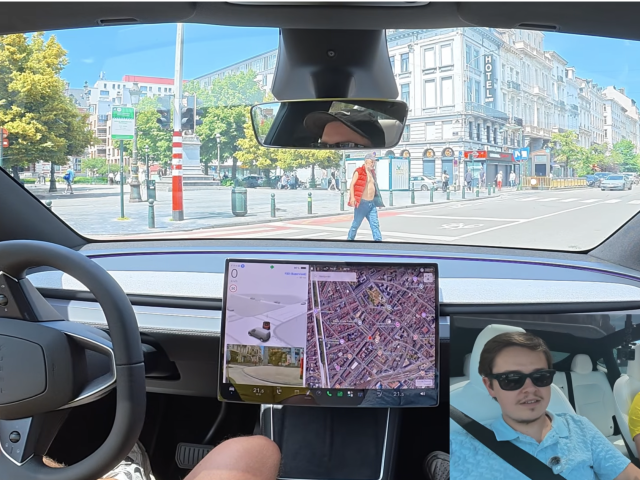
Photo: Tesla FSD operating in Brussels, Belgium / YouTube – Zelfrijder