

Tesla drops “Full Self-Driving” name in Europe, but Germany backs letting the system exceed speed limits
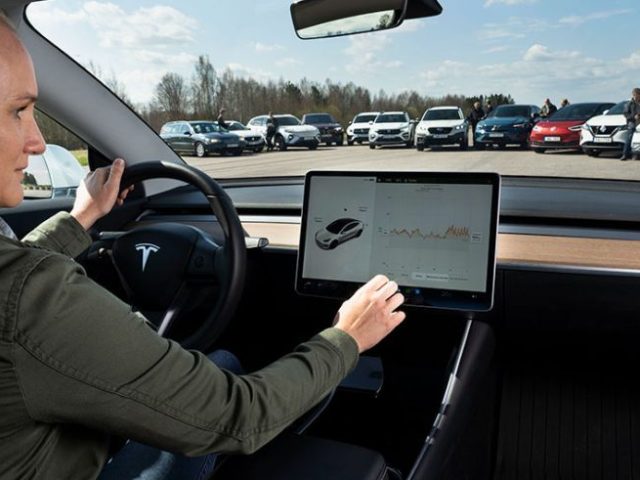
Tesla’s driver assistance system is now called “Tesla Assisted Driving” in Europe, after Germany’s transport ministry said the old name was misleading.
In a statement on 6 October, the ministry said “FSD – Full Self-Driving Supervised” was misleading, because the system supports accelerating, braking and steering but does not take over the driving task. Tesla offered the new name, and its European websites were using it within days.
The same statement revealed that the ministry and Tesla had agreed in September that the system may exceed the speed limit “slightly”, by up to 10%, and that Germany would support this approach in the EU approval process. Transport Minister Steffen Bilger said he wants the system approved across the EU as quickly as possible, but no national authorisation has yet been given.
Any such offset would be a clear breach of UNECE rules. UN Regulation No. 171, which applies on a mandatory basis in the EU, states that a driver assistance system “shall not enable the driver to set a default offset” above the detected speed limit. The EU version of Tesla’s system allows a permanent offset of up to 50%, as ETSC set out in a position paper last month. ETSC’s automation specialist Frank Mütze warned then that approving it “will hand every manufacturer a template for ignoring speed limits in future vehicles.”
Even a 10% offset would let cars using the system decide to drive at 110 km/h on German rural roads, where the default limit is 100 km/h. These are already Germany’s most dangerous roads: 1,580 people were killed on them in 2025, 56% of all road deaths, according to the Federal Statistical Office.
For ETSC, the bigger question is whether the system should be approved at all. Europe spent years negotiating Regulation No. 171 at the UNECE, and concluded there was no safety case for hands-off driving on rural and urban roads. Tesla’s system allows hands-off driving at all times. It was provisionally approved by the Dutch authority RDW in April under the EU’s “Article 39” exemption procedure for new technologies. ETSC argues that major policy decisions like this should be made via thorough processes that allow for the participation of all stakeholders.
Mercedes-Benz announced on 21 October that MB.DRIVE ASSIST PRO, which follows the navigation route through city traffic, changing lanes, turning at junctions and stopping at traffic lights, will reach selected customers in Germany from the end of this year. It is approved under Regulation No. 171 as it stands, which only allows hands-off driving on motorways and motorway-type roads, with a central barrier. Mercedes’ system keeps the driver’s hands on the wheel.
Tesla’s safety case is also in question. A Reuters investigation published on 7 October found that the company’s campaign for EU approval rests on research that cannot support its claims, according to seven traffic safety researchers who reviewed it. With too few miles driven on the system to compare crash rates, Tesla’s European study relied on “surrogate” measures such as horn and indicator use. None of the researchers found evidence for Tesla’s central claim that the system prevents fatal crashes. Reuters also reported that RDW eased parts of its review after repeated complaints from Tesla; RDW says its assessments are objective and independent.
In the United States, the National Highway Traffic Safety Administration is evaluating a petition claiming that Tesla Cybercab and Model Y vehicles using automated driving systems go too fast in active school zones.
An EU-wide vote by Member State representatives could come before the end of the year. In June, ETSC wrote to transport ministers urging them to get answers to key safety questions before recognising it.
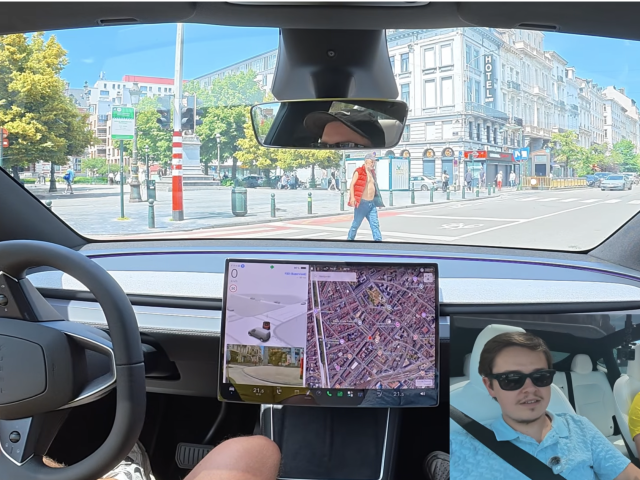
Photo: Tesla FSD operating in Brussels, Belgium / YouTube – Zelfrijder