




A two-speed Europe on road safety: a handful of countries on course to halve deaths, most falling behind
Road deaths in the European Union are falling at barely half the rate required to meet the EU’s target of halving deaths by 2030, according to the 20th annual Road Safety Performance Index (PIN) report, published today by the European Transport Safety Council (ETSC).
In 2025, around 19,500 people were killed on EU roads and more than 100,000 were seriously injured. At the halfway point of the 2020–2030 decade in which the EU has pledged to halve road deaths, road deaths are down just 15% from the pre-pandemic 2019 baseline – when a 31% reduction was needed to stay on course. Deaths fell by only 2% last year. Halving deaths by 2030 would have meant average annual cuts of 6.1% from 2019; but with Europe now well behind schedule, the required pace has to rise to around 10% a year for the rest of the decade – roughly five times the current rate of progress.
The index covers 31 countries – the 27 EU Member States bound by the 2030 target, alongside the non-EU countries Norway, Switzerland, the United Kingdom and Serbia. The overall pace of progress is far too slow, but it is not slow everywhere: the countries moving fastest since 2019 show the 2030 target is still achievable.
Some of the biggest gains have come from countries once ranked among Europe’s least safe. Since 2019, Poland has cut road deaths by 43% – the largest reduction of any country in the report.
Established front-runners are pulling further ahead, too. Belgium has reduced deaths by 31% since 2019 and is on track for the 2030 target, while in Denmark – already among the safest countries in Europe – road deaths are down 32%. Norway and Sweden remain the safest of the countries studied, at 19 road deaths per million inhabitants, against an EU average of 43 per million.
Today, Denmark receives the 2026 PIN Award for its long-term road safety performance at the ETSC PIN Annual Conference in Brussels.
The report also shows some of the key challenges that remain. In the Netherlands, the number of road deaths per million people is now higher than it was a decade ago – the only sizeable country in Europe where that is the case. With some of the highest cycling levels in Europe, keeping vulnerable road users safe demands greater road safety effort than elsewhere, and these figures suggest that effort is not yet being made.
Progress on serious injuries in Europe, meanwhile, has lagged far behind the fall in deaths, leaving an estimated 100,000 people seriously hurt on EU roads each year.
ETSC warns that hard-won gains are now at risk from moves to weaken existing rules. Proposals on the table would freeze the safety requirements for a new class of small electric cars for a decade, exempt electric vans from speed limiters, and enable thousands more longer and heavier lorries to operate across borders. Trade talks with the United States raise the prospect of recognising weaker US vehicle standards as equivalent to the EU’s.
The European Commission’s own mid-point review, published in February, concluded that progress is too slow and that its road safety “toolbox” may not be fit for the challenges ahead.
“This report shows a Europe moving at two speeds. Some countries are on course to halve road deaths by the end of the decade; most are falling behind, and the EU as a whole is well off course. None of this is inevitable – it reflects the choices governments make,” said Jenny Carson, co-author of the report.
ETSC calls on:
- National governments to adopt the Safe System approach in full, step up proven traffic enforcement, properly fund road safety, and fast-track collection of EU Key Performance Indicator data.
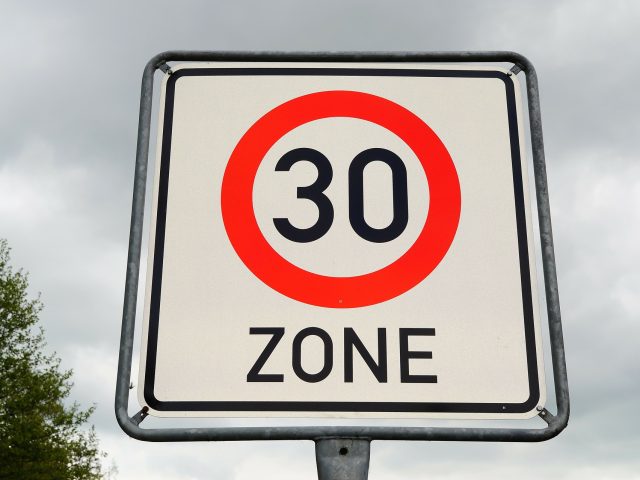
- The EU to halt the current weakening of vehicle safety standards and to prepare to strengthen them at the 2027 review of EU vehicle safety rules, and to recommend safe speed limits: 30 km/h in towns, 70 km/h on undivided rural roads, and no more than 120 km/h on motorways.
Download the report.