

ETSC writes to EU transport ministers on Tesla FSD as US crash highlights European oversight gap
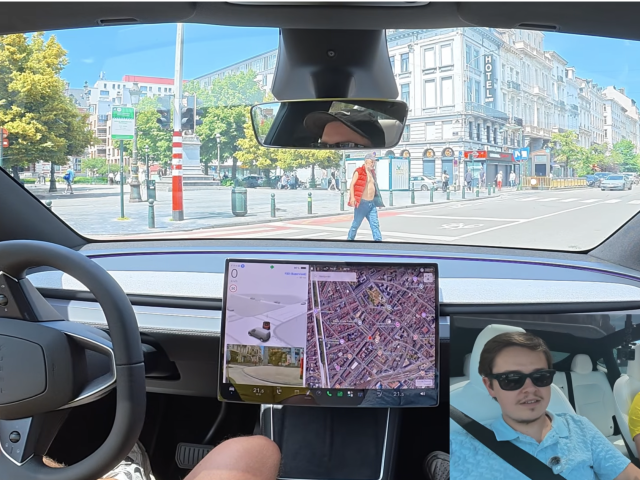
Two more Member States have recognised the Dutch RDW’s provisional type-approval for Tesla “Full Self-Driving (Supervised)” since last month’s Safety Monitor. On 10 June Flemish Mobility Minister Annick De Ridder confirmed Belgium’s recognition, and on the same day the Danish road authority also granted provisional approval. The Danish motoring association FDM said its own assessment had identified a serious error in the system’s behaviour.
On 12 June ETSC wrote letters to the transport ministers of every EU Member State other than the Netherlands and the four countries that have already recognised the Dutch approval (Belgium, Denmark, Estonia and Lithuania).
The letters urge ministers not to recognise the provisional approval until certain questions have been answered in public and until there is meaningful, published real-world safety evidence. The four questions concern whether the system has been independently shown both to improve safety and not to introduce new risks; why Member States are being asked to adopt a system that US federal authorities are currently investigating, including over the system running red lights and over its failure to warn the driver when its own cameras are degraded; how the risks of driver overreliance have been assessed and shown to be controlled over months of ordinary use, not on a test track; and, if something goes wrong on a Member State’s roads, who will investigate.
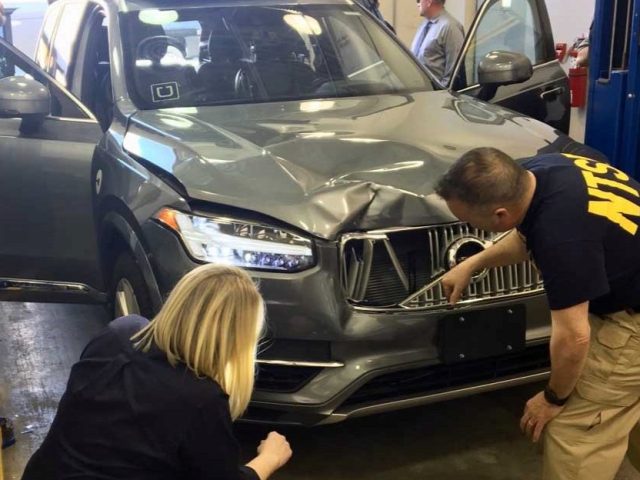
That last question gained additional relevance on 24 June, when the US National Transport Safety Board (NTSB) began an investigation after a Tesla Model 3, reportedly in self-driving mode, crashed into a Texas home and killed a woman.
As ETSC has set out in its letter, Europe currently has no equivalent of the US NTSB. If a similar collision occurred in any of the countries that have now recognised the Dutch approval, it is not clear whether other Member States or the public would be alerted, who would lead an independent technical investigation, or how the findings would be shared with regulators, industry and the public.
Update: During the Motor Vehicle Working Group on 1 July, a representative from Switzerland asked whether RDW would carry out the in-service monitoring and reporting analysis for countries that adopt the approval. RDW clarified that in case of situations in such a country, it would contact that Member State’s authorities and discuss the situation with them.
ETSC argues that crashes involving automated and assisted driving systems should be treated more like aviation incidents than ordinary road collisions. A failure in software implicates not a single vehicle, but every other vehicle running the same system, numbering in the thousands in the case of Tesla’s FSD. Independent investigation and public sharing of findings is essential not only for accountability, but for safety learning across the wider vehicle fleet, the regulator community, and the public.
A second discussion of Tesla FSD is scheduled at the European Commission’s Technical Committee on Motor Vehicles on 30 June, and the Finnish transport agency Traficom has indicated that a vote on EU-wide recognition is expected in October.
In the meantime, Reuters reported on 15 June that Tesla had presented misleading FSD safety data to European regulators, and Sweden has indicated it may oppose recognition over the system’s handling of speed limits.
It has also emerged in recent days that Tesla has reached a settlement in a court case brought by the daughter of a woman who died after being struck by a Tesla vehicle operating in FSD mode in 2023 in the United States.
With regards to assisted driving systems in general, ETSC will be presenting, at this Friday’s meeting of the European Commission’s subworking group on automated and connected vehicles, a set of questions it considers should be answered before any regulatory steps are taken to expand the UN rules for such systems.
Photo: Tesla FSD operating in Brussels, Belgium / YouTube – Zelfrijder