





More countries turn to cameras to catch drivers on the phone
Belgium expects to start using cameras that automatically detect drivers holding a phone in 2028, and Austria is under pressure to follow.
Belgium’s federal mobility minister, Jean-Luc Crucke, confirmed the timetable at the country’s annual road safety conference this month, as one of five new measures announced after Belgian road deaths rose in the first half of this year. A working group of the mobility ministry, police and justice is due to report by the end of this year, with the system introduced during 2027 and the first checks expected in 2028. Crucke and interior minister Bernard Quintin want to copy the Dutch system. Today, catching drivers on the phone in Belgium depends largely on police officers seeing it for themselves. Cameras can only be used when phone use happens to show up on a photo already triggered by speeding or running a red light.
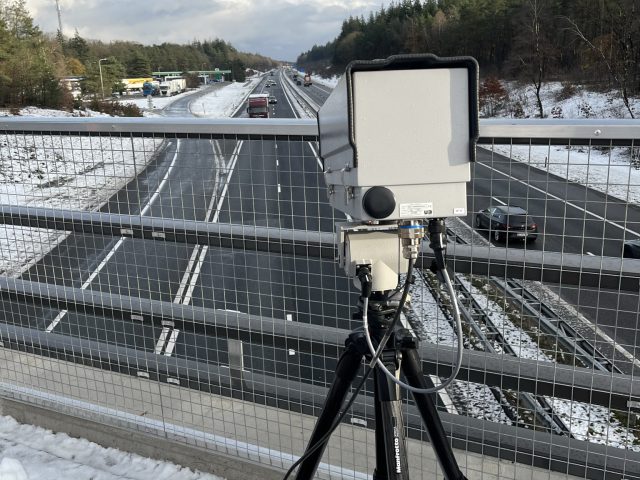
The Netherlands became the first EU country to issue automated fines for phone use in 2020, and expanded the network after trials showed the cameras were more than 95% accurate. In Germany, Rhineland-Palatinate became the first state to deploy the same camera last year, after changing its police law. Dutch police have also demonstrated the camera to officials from Bulgaria, Croatia and Portugal during study visits under the EU Road Safety Exchange, a European Commission project managed by ETSC.
In Austria, ETSC member KFV is calling for the cameras to be introduced there too. KFV says distraction is a factor in around a quarter of the roughly 400 road deaths in Austria each year. Data protection rules currently stand in the way, but KFV’s Armin Kaltenegger told ORF that a small change to the road traffic act would be enough, since similar provisions already exist for speed cameras.
The scale of the problem was shown by a two-week trial at two sites in Birmingham and Wolverhampton in the UK in March. AI cameras flagged 1,920 potential mobile phone offences and 17,225 potential seatbelt offences.