

Progress on drink-driving stuck in neutral, while police checks decline
Alcohol-related road deaths in Europe have fallen no faster than other road deaths over the past decade, while police are carrying out fewer roadside alcohol checks, according to a new report published today by ETSC.
Between 2014 and 2024, recorded alcohol-related road deaths fell by 19% in the 21 EU countries with consistent data – exactly the same rate as all other road deaths.
An estimated one in four road deaths in the EU is alcohol-related. Of the roughly 19,400 people killed on EU roads in 2025, several thousand are therefore likely to have died in collisions involving alcohol. Without renewed action on drink-driving, the EU will not meet its target of halving road deaths by 2030.
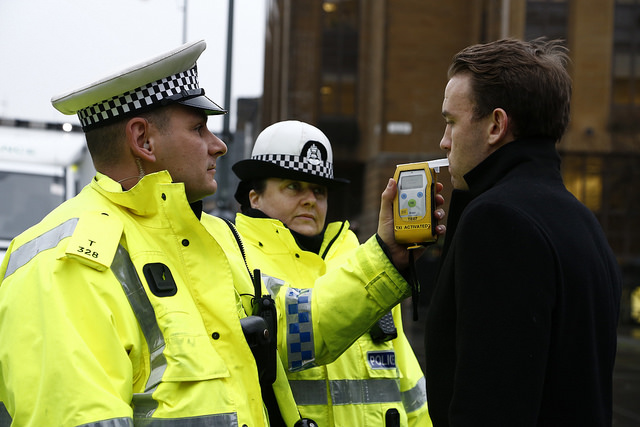
At the same time, police are carrying out fewer checks. In 11 of the 16 countries able to provide comparable data, the number of roadside alcohol breath tests fell between 2014 and 2024; it rose in just five. Only around 17% of EU car drivers think it likely they will be checked for alcohol on a typical journey, and 14 of the 31 countries covered still cannot say how many roadside checks their police carry out.
Enforcement levels vary enormously. Estonia carried out 841 roadside alcohol checks per 1,000 inhabitants in 2024, Poland 438 and Hungary 260. Ireland, by contrast, carried out just 36 per 1,000. In the UK and Germany, police still need some suspicion of drinking before they can test a driver.
Countries that have stepped up enforcement are seeing results. In 2025, Greek traffic police significantly increased alcohol checks, considered one of the main reasons for a 22% fall in road deaths compared with 2024. In Serbia, every driver stopped by police is breath-tested, and alcohol-related road deaths fell from 173 to 102 between 2016 and 2024.
Several countries are also moving to a 0.2 g/l blood alcohol concentration (BAC) limit – a level that in practice means not drinking at all before driving. Nine countries already apply a limit of 0.2 g/l or lower to all drivers. Denmark introduced a 0.2 g/l limit for novice drivers in 2025, and Belgium has proposed one which, if approved, would apply from 2027. The UK government has consulted on cutting the limit in England and Wales from 0.8 g/l, the highest in Europe, to 0.5 g/l. At EU level, the revised Driving Licence Directive requires countries to apply stricter drink-driving rules or sanctions to novice drivers during a probationary period of at least two years. But a proposed EU-wide alcohol ban for novice drivers was dropped, and the Directive sets no common limit.
Eight European countries now allow drink-driving offenders to fit an alcohol interlock – a breathalyser-style device that stops the engine starting if the driver has been drinking – as part of a rehabilitation programme. In France, around 2% of drivers reoffended in the year after an interlock measure ended, compared with 6% after a licence suspension. Since 2025, Italy has required an interlock for all drivers convicted with a BAC above 0.8 g/l. The revised EU Driving Licence Directive will also allow people who are alcohol-dependent to hold a licence restricted to vehicles fitted with an interlock, combined with treatment – a change ETSC had repeatedly called for.
Official statistics also capture only part of the problem. Police in 21 EU countries recorded 2,224 deaths in alcohol-related collisions in 2024, around 16% of all road deaths – well below the estimated one in four. In many countries, not everyone involved in a serious collision is tested for alcohol, and test results are not always recorded in official statistics.
“For ten years, drink-driving deaths have fallen only as fast as road deaths in general – the measures meant to tackle drink-driving are not pulling their weight. Most drivers don’t expect to be stopped, and most countries with data available are now doing fewer checks, not more. A 0.2 limit everywhere would send the simplest message of all: if you’re driving, don’t drink. As Europe heads into the festive season, governments need to act,” said Antonio Avenoso, Executive Director of ETSC.
ETSC calls on:
- National governments to set annual targets for roadside alcohol checks (for example, checking one in five drivers each year), adopt a 0.2 g/l limit for drivers and riders of motorised vehicles, test everyone involved in fatal and serious collisions, and offer alcohol interlock programmes combined with rehabilitation for repeat and high-level offenders.
- The EU to strengthen its guidance on drink-driving enforcement, encourage alcohol interlocks in professional transport including through public procurement, and measure drink-driving using data from police roadside tests rather than self-reported surveys. A Directive setting a maximum BAC of 0.2 g/l for all drivers would also be welcome.
Download the full report at www.etsc.eu/smart2026