



Progress in reducing drink-driving and other alcohol-related road deaths in Europe
Alcohol remains one of the leading risk factors for road deaths and serious injuries in Europe. Although only an
estimated 1.5–2% of kilometres travelled in the EU are driven with an illegal blood alcohol concentration (BAC),
an estimated one in four road deaths is alcohol-related. Of the approximately 19,400 people killed on EU roads
in 2025, several thousand are therefore likely to have died in collisions involving alcohol. Yet official figures
capture only part of the problem: police records in 21 EU countries identified 2,224 deaths in alcohol-related
collisions in 2024, around 16% of all road deaths in those countries. Keeping alcohol-impaired road users off the
roads could save thousands of lives every year.
Drink-driving deaths are falling, but no faster than other road deaths. Between 2014 and 2024, recorded
road deaths attributed to alcohol fell by 19% in the 21 EU Member States that could provide consistent data,
matching the reduction in other road deaths. Progress also varies widely between countries. Sixteen countries reduced alcohol-related deaths faster than other road deaths, led by Cyprus, Hungary and Serbia, while in Latvia and Spain other road deaths fell faster. The picture for serious injuries is similarly mixed: of the 23 countries providing data, 14 recorded a decline in serious injuries in alcohol-related collisions, two saw little change and seven recorded increases. Without renewed action on drink-driving, the European Union will not achieve its road safety targets.
Alcohol-related harm goes beyond motor vehicle drivers. Pedestrians, cyclists and e-scooter riders are at
risk both from impaired drivers and when they are under the influence themselves. Pedestrians accounted for
around 12% of alcohol-related road deaths in the EU in 2022–2024, and for more than half in Bulgaria and
Slovakia. Evidence from individual countries also points to alcohol as a significant factor for cyclists and e-scooter
riders: in Finland, around one in five cyclists killed between 2018 and 2022 was under the influence of alcohol,
and studies link alcohol to up to 40% of e-scooter deaths. Yet several countries still have no BAC limit for cyclists
or e-scooter riders. The full scale of the problem remains difficult to establish, because these road users are not
always systematically tested for alcohol and national definitions and reporting practices differ.
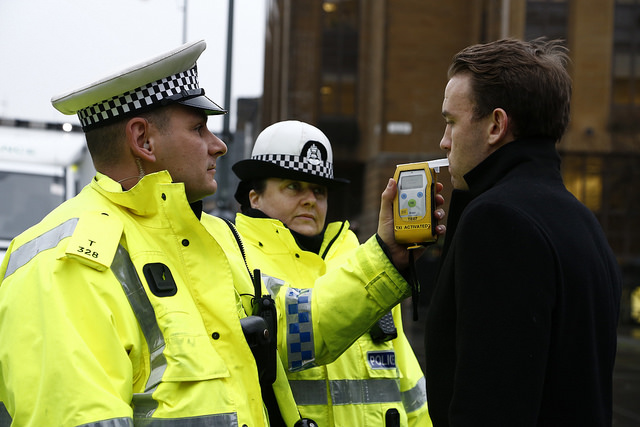
Drink-driving enforcement remains insufficient and inconsistent. Of the 16 countries able to provide
comparable data, only five increased the number of roadside alcohol breath checks between 2014 and 2024,
while the other eleven saw a decline. Enforcement levels also vary enormously between countries. Drivers
perceive little risk of being caught: in the 2023 ESRA survey, only around 17% of EU car drivers considered it
likely that they would be checked for alcohol on a typical journey. Frequent, visible and unpredictable roadside
alcohol checks are essential to increase the perceived likelihood of detection and deter drink-driving. Wider use
of evidential breath testing, already in place in 20 of the 28 countries that provided information, would allow
police to process more cases, as roadside results can then be used as evidence in court without a blood test.
Better data are essential to measure progress and target action. National differences in the definition and
recording of alcohol-related deaths make direct comparisons between countries difficult, and six EU Member
States could not be included in the EU-wide trend because of inconsistent or missing data. Alcohol testing is
not always carried out systematically on all participants in fatal and serious collisions, and test results may not be
incorporated into official statistics. Data on enforcement are also patchy: 14 of the 31 countries covered could
not provide figures on roadside breath tests. All countries should apply the common SafetyNet definition of an
alcohol-related road death and collect comparable data on deaths and serious injuries, roadside checks and
positive test results.
Legal BAC limits still vary across Europe. Seven EU Member States, as well as Norway and Serbia, apply a
limit of 0.2 g/l or lower to all drivers, while England and Wales retain a limit of 0.8 g/l. Bulgaria and Finland still
have no lower BAC limit for novice or professional drivers, and several other Member States, including Denmark
and the Netherlands, have no lower limit for professional drivers. There is evidence that lower limits save lives:
a Belgian study estimated that lowering the limit from 0.5 g/l to zero could prevent 10–17 deaths and 8–20
serious injuries each year. Studies from Ireland and Finland also show that young drivers are overrepresented
among drink-drivers involved in serious and fatal crashes.
Alcohol interlocks and rehabilitation offer opportunities to reduce repeat and high-level offences.
Eight countries already use alcohol interlocks as part of rehabilitation programmes for drink-driving offenders,
and in 2025 Italy made interlocks compulsory for all drivers convicted with a BAC above 0.8 g/l. The evidence is
encouraging: a 2025 evaluation in France found reoffending rates of around 2% in the year after an interlock
measure ended, compared with 6% after an administrative licence suspension. Interlock programmes are
particularly effective when combined with rehabilitation, counselling and appropriate medical or psychological
supervision. The revised EU Driving Licence Directive now allows drivers with alcohol dependency to be licensed,
provided they use technology such as an alcohol interlock and are subject to periodic review of their treatment.
Professional transport and public procurement should play a greater role. Alcohol-related collisions
involving buses, trucks and other commercial vehicles can have particularly severe consequences because of
the size and mass of these vehicles. Experiences in countries including France, Finland, Norway and Sweden
demonstrate different ways of using alcohol interlocks in commercial and public transport as well as in public
procurement.
Drink-driving campaigns can play an important role in raising awareness, encouraging safer behaviour,
particularly among young and novice drivers. However, campaigns need to be systematically evaluated to assess their impact on attitudes, actual driving behaviour and road casualties. The growing availability and promotion of non-alcoholic drinks may also offer an alternative to alcoholic drinks, although further research is needed to establish their potential influence on drink-driving behaviour and road safety.