



UK road safety strategy signals long overdue shift
The UK government has published a new road safety strategy that, if fully implemented, would mark a significant change of direction after more than a decade of limited progress.
ETSC welcomes the renewed political attention to road safety and several concrete measures that closely align the UK with best practice across Europe. In particular, the strategy signals a clear realignment with EU vehicle safety standards, including mandatory technologies such as automated emergency braking. Evidence from across Europe shows these systems can prevent serious crashes and save lives. EU vehicle standards are already mandatory for new cars sold in Northern Ireland.
ETSC also strongly welcomes the proposal to lower the drink-driving limit. England and Wales currently have the highest legal blood alcohol limit in Europe, a situation that has long undermined road safety efforts. Lower limits are associated with fewer drink-driving crashes and fewer deaths. The commitment to introduce alcohol interlocks is equally positive. These devices are already used in Belgium, Denmark, Finland, France, Italy, Poland and Sweden, where they have proven effective in preventing repeat drink-driving.
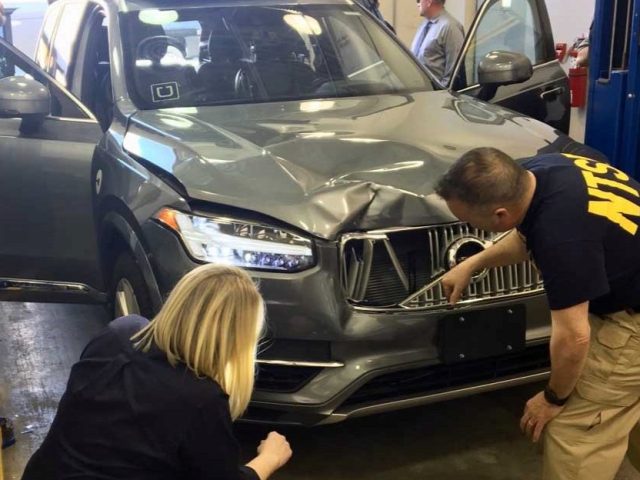
Another important element is the proposed relaunch of a road safety investigation branch. This had been announced by the previous government but was later dropped. ETSC hopes this time the proposal will go ahead. An independent investigation body is essential, especially as assisted and automated driving systems become more common. Serious crashes involving these technologies must be investigated independently and transparently to identify risks and prevent future harm. The EU faces a similar challenge and also needs a dedicated EU-level road safety agency to fulfil this role.
The strategy also introduces new national road safety targets. Clear, ambitious targets matter. They provide direction, accountability and a benchmark for success. Without them, progress tends to stall.
This renewed focus is badly needed. Despite its reputation as a relatively safe country, the UK has achieved very little improvement in recent years. Road deaths have fallen by only 8 percent over the past ten years. By contrast, in Norway deaths fell by 39 percent over the same period. This stark difference underlines the importance of political will, sustained investment and strong targets. It also shows that even countries with a good road safety record can achieve remarkable results when road safety is treated as a genuine priority.
ETSC hopes this strategy marks the start of a new chapter. With consistent delivery, adequate funding and robust enforcement, the UK has the potential to become a road safety leader once again.
Northern Ireland to move forward with graduated driving license
Northern Ireland will implement a Graduated Driver Licensing (GDL) scheme from 1 October 2026. Infrastructure Minister Liz Kimmins announced the reform to tackle the disproportionate risk faced by young and novice motorists.
Learners must now complete a six-month learning period and a 14-module training programme, documented via a digital logbook, before sitting their test. Upon qualifying, the existing 12-month “R-plate” restriction will be extended to 24 months.
A significant new measure restricts night-time passengers: for the first six months, drivers under 24 may only carry one passenger aged 14-20 between 11:00 PM and 6:00 AM. Exceptions apply for family members or when supervised by an experienced driver.
Minister Kimmins noted that while those aged 17–23 hold just 8% of licences, they are involved in 24% of fatal or serious collisions.