

Tesla approval pushes Europe towards a road safety cliff edge
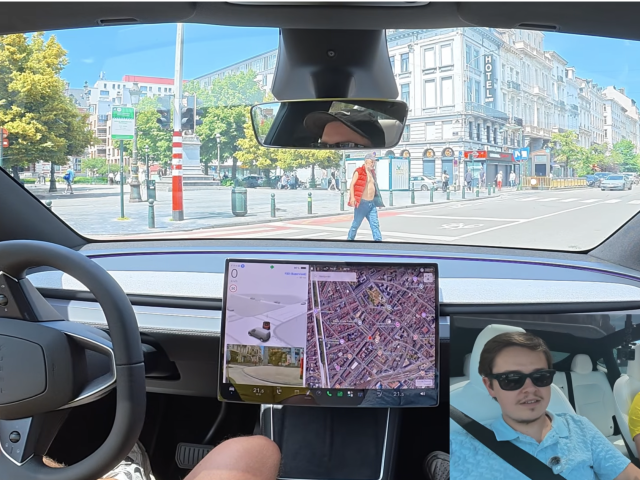
In a matter of weeks, an unelected committee meeting behind closed doors in Brussels could green-light hands-off driving in European cities and on rural roads, on the back of a single national approval and despite active US federal investigations into the very system under discussion. On 10 April, the Dutch vehicle authority RDW granted provisional EU type-approval to Tesla’s “FSD (Supervised)”. Unless the European Commission changes course, that decision will become continent-wide policy through a procedure with no public deliberation and no opportunity for civil society to be heard.
ETSC have written to the Commission urging it to pause the process while a number of urgent questions are answered and the desirability of allowing such systems is discussed publicly.
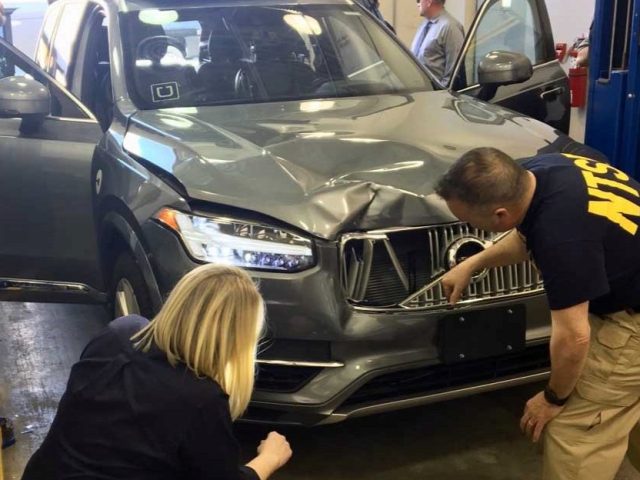
The stakes are not abstract. On 31 March, the head of the US National Transportation Safety Board, Jennifer Homendy, concluded an investigation into two fatal 2024 crashes involving Ford’s hands-free BlueCruise system with the words: “These systems function primarily as convenience features rather than safety enhancements.” The finding, she said, applies across the industry. In the same remarks, she pointedly praised European regulators for being “well ahead” of the US on vehicle safety standards. That reputation took decades to build. Europe may now be weeks away from wrecking it.
RDW’s own explanation of the approval is unambiguous: FSD (Supervised) “is not self-driving”; the driver remains legally responsible and must be ready to take over immediately. The system tracks the driver’s eyes and assesses whether their hands are “available” to grip the wheel; persistent inattention triggers warnings and, eventually, a temporary lock-out.
But that reassurance rests on a premise human factors research has been steadily dismantling for years. The more capable an assisted driving system appears, the worse drivers become at supervising it. Minds wander. Attention drifts. The driver, still legally responsible, becomes a passive monitor: a role for which humans are notoriously ill-suited. Driver-monitoring systems can blunt this effect; they cannot eliminate it.
A single national approval that will set the rules for everyone
The provisional approval in the Netherlands was issued under Article 39 of Regulation (EU) 2018/858, an exemption procedure for technologies not compatible with harmonised EU rules. For the system to be used across the EU, the Commission must adopt an implementing act authorising the approval, requiring a vote in the Technical Committee – Motor Vehicles (TCMV). Under Article 40, an authorisation then obliges the Commission to bring the underlying UN regulation, in this case UN Regulation No. 171 on Driver Control Assistance Systems (DCAS), into line.
In other words, the TCMV vote is not on a narrow technical question. It will effectively decide whether hands-off driving combined with system-initiated manoeuvres in urban and rural environments, a step well beyond what is currently allowed and beyond even the next round of DCAS rules soon to be adopted in Geneva, becomes the European norm. And the TCMV operates in private, with no formal route in for civil society, road safety experts, or anyone else outside the room.
There is a parallel danger. Other Member States can, in principle, recognise the Dutch provisional approval nationally without waiting for the Commission process at all. ETSC calls on Member States to refrain from doing so, until there is transparent deliberation at EU or UN level and real-world safety evidence from Dutch roads.
The US is investigating. Europe cannot.
The picture from the United States is alarming and getting worse. The National Highway Traffic Safety Administration (NHTSA) has two active independent investigations into FSD: one, recently escalated, into the system’s failure to detect or warn the driver when its cameras are degraded; another into traffic law violations including running red lights. Users have already posted videos of FSD (Supervised) crossing solid lane markings on Dutch roads.
Tesla FSD in The Netherlands 🇳🇱
— Robbin | (@rdekruyf) April 21, 2026
Example 10: Weird move! FSD ignored a solid white line and randomly switched lanes. Not allowed. 😬#FSD #TeslaFSD #Tesla #Netherlands $TSLA pic.twitter.com/1tUtEZWroC
Ford BlueCruise, the system at the centre of the NTSB’s 31 March finding, is already approved for hands-off motorway driving in several European countries. There is no European equivalent of NTSB to scrutinise how it is performing here, and there will be none to scrutinise FSD either. ETSC has been pointing out this institutional gap for years. With FSD now poised for EU-wide approval, the gap is no longer a theoretical concern. It is the reason the Commission should postpone the vote in the TCMV until the questions raised by US authorities have been answered in public.
What ETSC is calling for
ETSC has written to RDW with detailed questions about the evidence behind its approval, the workings of the driver-monitoring system, and the extent to which the US investigations were taken into account. ETSC has now written to Executive Vice-President Séjourné with two demands: that the Commission convene open discussions on whether expanding DCAS to hands-off driving in non-motorway environments is desirable at all; and that no implementing act be put to the TCMV until that public deliberation has run its course.
The United Kingdom and Japan have already called at UNECE for regulatory work on DCAS to be paused, while experience is gained with the currently-allowed implementations of the system. They are right.
A decision that will shape how Europeans live and die on their roads for the next decade cannot be rushed through a closed committee in a matter of weeks.