



OPINION: Europe is driving blind into the era of assisted driving
By Antonio Avenoso, Executive Director, ETSC
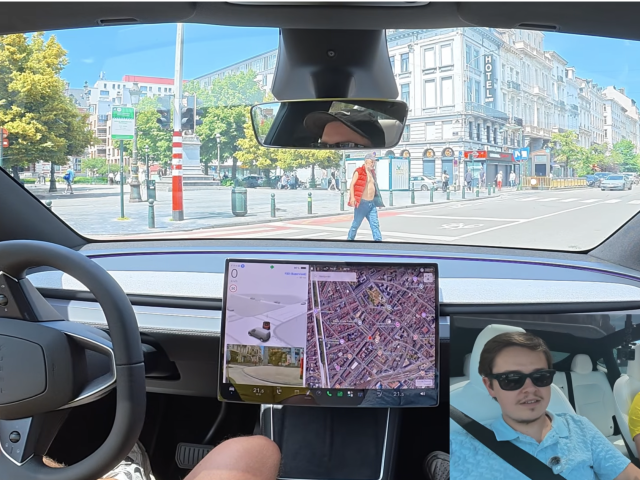
In the near future, a new generation of so-called “Level 2++” vehicles will begin appearing on European roads. These systems can steer, accelerate, brake and even carry out overtaking manoeuvres without any direct input from the driver. With the EU’s adoption of UN Regulation 171 on driver control assistance systems (DCAS), many of the regulatory limits on assisted driving have effectively been removed.
This is a profound shift in how cars will behave on public roads. Yet it is happening without a corresponding shift in how Europe monitors safety.
While vehicle software has advanced rapidly, Europe’s systems for transparency, investigation and public accountability remain largely unchanged. The result is a growing gap between what these technologies can do and what regulators, researchers and citizens are allowed to know about how they perform in the real world.
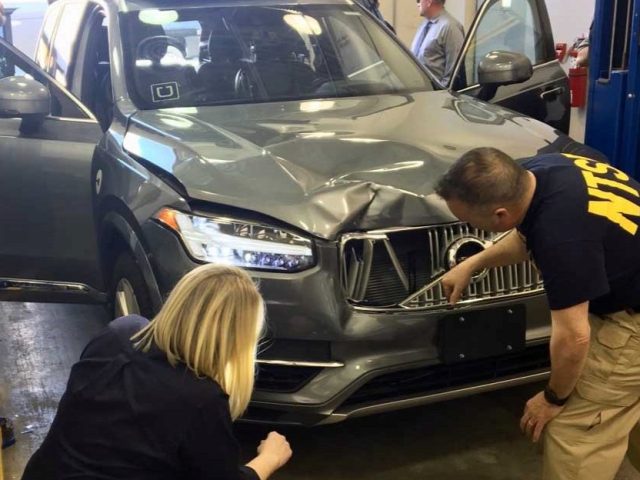
The most striking weakness is institutional. Europe lacks a centralised equivalent to the United States’ National Highway Traffic Safety Administration or National Transportation Safety Board. In the US, manufacturers must report crashes involving advanced driver assistance systems to a central authority. Serious incidents can trigger independent investigations whose findings are published and translated into safety recommendations across the industry.
In Europe, by contrast, information flows to national type approval authorities. It is accessible to regulators including other national authorities, but closed to independent researchers, civil society organisations and the public. Reports on system failures, dangerous behaviour and near-collisions remain confidential. Consumers are expected to trust technologies whose real-world performance they are not allowed to scrutinise.
The new assisted driving systems operate in a psychological grey zone. Because vehicles can now initiate complex manoeuvres on their own, many drivers may naturally assume the car is largely in control. Yet by law, full responsibility still rests with the human behind the wheel. Drivers are expected to supervise an increasingly automated system for long periods and intervene instantly when something goes wrong.
Decades of human factors research show how unreliable this model is. Automation encourages complacency, slower reaction times and misplaced confidence. When errors occur, they tend to happen suddenly and at speed.
Without independent monitoring and public data, Europe cannot systematically track problems such as flawed decision logic in dense traffic. Each manufacturer may learn from its own fleet, but there is no single, central authority tasked with monitoring and identifying systemic risks.
In effect, the EU is allowing large-scale experimentation on public roads without full transparency on safety.
The contrast with other transport sectors is striking. Aviation, rail and maritime safety are overseen at EU level by dedicated agencies built around independent investigation and open reporting. Road transport, despite causing around 20,000 deaths annually across the Union – vastly more than those other sectors combined – remains governed by fragmented national oversight and limited data sharing. If the EU is serious about its stated goal of eliminating road deaths by 2050, this imbalance is no longer defensible.
The European Commission should establish a dedicated EU Road Safety Agency with the authority and resources to collect data on automated and assisted driving systems, conduct and coordinate independent investigations into serious collisions, and publish its findings. Transparency should be the default, not the exception.
As vehicles take on more of the driving task, public accountability must increase. Technological changes without institutional reform will merely make risks harder to see.
Europe should not enter the era of assisted driving with its eyes closed.