



Europe’s robotaxi expansion risks lack of safety oversight
A flurry of industry announcements has signaled a major push for driverless taxis across Europe. However, ETSC warns that the rapid commercial rollout is currently outpacing the institutional capacity to investigate crashes and ensure public safety.
Earlier this month, Uber and the Chinese and US-based autonomous technology firm Pony.ai announced a strategic partnership to launch a commercial robotaxi service in Zagreb, Croatia.
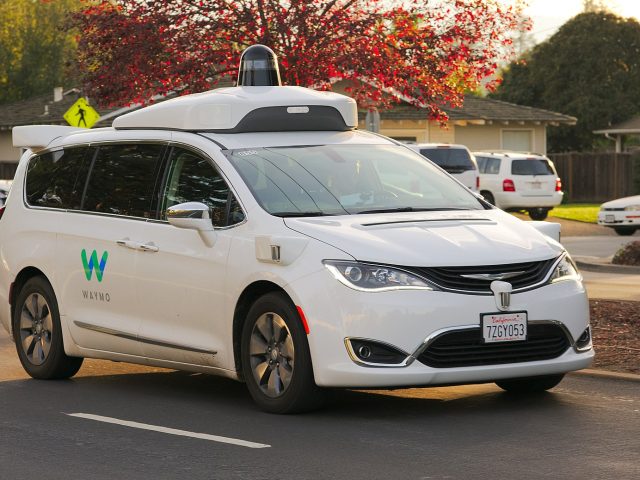
The move coincides with a major milestone in the UK: Waymo is slated to begin its first trial service for paying passengers in London this September.
In the UK, the Waymo trial is being monitored by the government’s Centre for Connected and Autonomous Vehicles (CCAV), but the government’s promised Road Safety Investigation Branch (RSIB) – an independent body designed to analyse collisions with the same rigor as aviation or rail authorities – is not yet operational.
Oversight gaps are a major concern for ETSC. Recent experiences from robotaxi rollouts in the US highlight the importance of reporting, recalls and independent investigations by the National Highway Traffic Safety Agency (NHTSA) and the National Transport Safety Board (NTSB).
Pony.ai’s autonomous vehicles were subject to the first recall by a US agency in 2022, following a collision in California.
The NTSB is currently investigating a collision where a Waymo vehicle struck a child in a school zone in January, and has released preliminary findings.
The NTSB report reveals important details. While the Waymo vehicle was traveling at 17 mph – technically within the 25mph limit – the crash occurred just 40 feet (12 meters) after a 15 mph school zone ended, and during the busy morning drop-off period.
While such collisions, involving a child running out from between vehicles, have been referred to as “unavoidable” for the AV in regulatory discussions, authorities must look deeper. In Europe, regulations on automated driving require the system to demonstrate “anticipatory behavior” – such as slowing down near a queue of cars by a school. The NTSB investigation could reveal whether the Waymo vehicle was displaying such anticipatory behaviour.
ETSC is calling for the immediate establishment of a dedicated EU Road Safety Agency to oversee the rollout of assisted and automated driving.
ETSC insists that any further rollout must be contingent on:
- Independent crash investigations: Investigations conducted by experts with no ties to manufacturers.
- Transparent data: Mandatory, public reporting of all collisions and “near-miss” incidents.
- Strict market surveillance: Continuous monitoring to ensure software updates do not introduce new risks.