
Briefing: UNECE talks could accelerate “Level 2++” driving in Europe – with major safety concerns
What is happening this week?
This week, governments meeting under the United Nations Economic Commission for Europe (UNECE) are expected to endorse new rules that expand what advanced assisted driving systems are allowed to do. The discussion is taking place on Wednesday (21 January) in UNECE’s Working Party on Automated/Autonomous and Connected Vehicles (GRVA). This endorsement is the penultimate step before final approval later this year by UNECE’s main vehicle standards forum, the World Forum for Harmonization of Vehicle Regulations (WP.29).
Why does this matter for the European Union now?
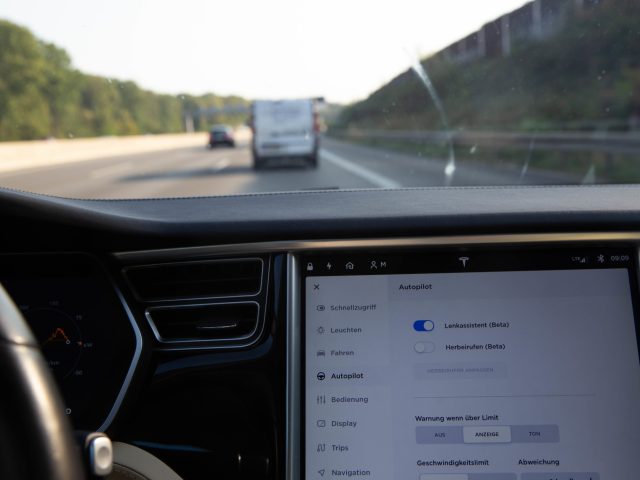
UNECE rules strongly influence what vehicle systems can be approved and sold across Europe. This week’s decision could accelerate the rollout of advanced assisted driving systems often described in media as “Level 2++” – the type of system behind widely publicised features such as Tesla Autopilot “Full Self Driving” (FSD) and similar packages from other manufacturers.
ETSC is concerned that this pushes Europe toward cars that appear to drive themselves while still requiring the human to supervise perfectly at all times.
What exactly is being updated?
The rules concern Driver Control Assistance Systems (DCAS) – a category of advanced assisted driving systems that can control steering and speed together under certain conditions, but are still legally classified as assistance to a human driver. That legal classification matters because with assisted driving, the driver remains responsible for everything the vehicle does.
What new capabilities would be allowed?
The updated rules would allow manufacturers to expand DCAS in two key ways:
- Motorway (or motorway-like) driving:
Systems could combine hands-off driving with system-initiated manoeuvres – actions the vehicle decides to carry out on its own without any approval by the driver. - Urban and rural roads:
Systems could also perform system-initiated manoeuvres as long as the driver keeps their hands on the steering wheel.
What are “system-initiated manoeuvres” and why are they controversial?
System-initiated manoeuvres are when the vehicle decides to take an action without the driver actively choosing it at that moment, for example changing lane to overtake. The risks are higher in complex situations such as:
- entering or navigating roundabouts
- handling junctions and intersections
- interacting with pedestrians and other road users at pedestrian crossings
These are the moments where there is little or no opportunity to override the system unless drivers already have their feet on the brake pedal and have very fast reaction times.
What is ETSC’s primary concern?
ETSC’s core concern is that UNECE is allowing assisted driving systems to take over more of the driving task while still leaving the human driver legally responsible if something goes wrong. This further blurs the line between:
- Assisted driving, where the human driver is responsible for safety, and
- Automated driving, where the system takes responsibility while active.
ETSC believes this “grey zone” is dangerous because it relies on unrealistic expectations of human supervision.
Why is this “grey zone” a safety problem?
As these systems take more control, people naturally shift from active drivers to passive supervisors. But humans are not well suited to supervising automation for long periods and then instantly taking over in a critical situation. ETSC warns that current rules assume drivers will stay constantly aware and ready to act, despite increasing autonomy of the system.
Don’t the rules require drivers to stay attentive?
Some safeguards exist, including requirements for the driver to remain “visually engaged”. But ETSC stresses that “looking ahead” does not necessarily mean a driver is truly mentally engaged with what the system is doing or ready to intervene immediately. People can look forward while their thoughts are elsewhere, especially if they believe the car is handling the situation.
Why is hands-off driving especially risky?
Allowing drivers to take their hands off the wheel increases the likelihood they will:
- become over-confident in the system
- pay less attention
- react more slowly in emergencies
ETSC has repeatedly raised concerns about allowing hands-off driving while keeping the driver responsible for the outcome.
How does this relate to true automated driving?
At the same time as these assisted driving rules are being expanded, the same UNECE group is expected to endorse a draft regulation on automated driving systems. Unlike assisted driving, automated driving systems are designed so the system itself takes full responsibility for driving in specific conditions.
This raises the question: If regulators are moving toward rules for genuinely automated vehicles – where responsibility shifts to the system – why are they also expanding assisted systems that behave like automated vehicles but still depend on constant human supervision?
What is the risk for accountability and public understanding?
Two systems may look nearly identical to drivers – for example, a car that can steer, change speed, and overtake. But in one case the driver is fully responsible; in the other, the system takes responsibility while active. ETSC is concerned that expanding Level 2++ systems blurs this distinction, misleading drivers about what the system can safely do and who is accountable when it fails.
Is there evidence these systems improve road safety?
ETSC notes that in the United States, research and safety investigations have not shown clear evidence that Level 2(++) assisted driving systems improve road safety. ETSC is also unaware of any data that demonstrate that the safeguards introduced for earlier DCAS systems are sufficient in the real-world.
What is missing in Europe compared to the US?
In the United States, agencies such as the National Transportation Safety Board (NTSB) and the National Highway Traffic Safety Administration (NHTSA) investigate crashes and collect data on issues involving advanced driving systems. Europe currently has no equivalent dedicated authority to oversee the rollout of these assisted and automated driving technologies, collect data on incidents, or investigate collisions involving assisted and automated systems.
ETSC is calling for a dedicated EU agency to:
- oversee the rollout of these systems
- receive the mandatory reporting data on collisions involving them
- independently investigate crashes and publish findings
- help prevent future collisions through evidence-led recommendations
ETSC argues this kind of agency is essential to monitor real-world performance and protect all road users.