




UN endorsement of new assisted driving rules opens door to risky “Level 2++” technology in Europe
Delegates at the United Nations Economic Commission for Europe (UNECE) have endorsed a new set of standards for Driver Control Assistance Systems (DCAS), marking a pivotal shift in the capabilities of vehicles with assisted driving systems on European roads. The decision, reached during the latest session of the Working Party on Automated/Autonomous and Connected Vehicles (GRVA) in Geneva earlier this month, clears the way for a more aggressive rollout of what has been nicknamed “Level 2++” technology.
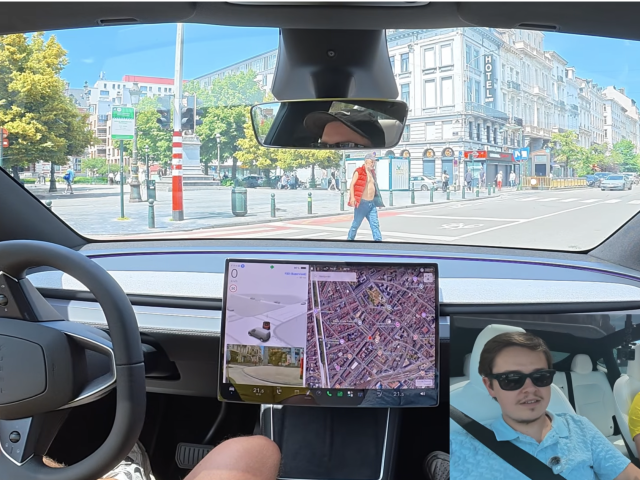
The new regulation expands the legal scope of assisted driving by permitting previously restricted features. Most notably, the updated rules allow vehicles to perform “system-initiated manoeuvres,” such as overtaking, without explicit driver confirmation. This is permitted in two ways: “hands-off” on motorways, and “hands-on” across all road types, including urban environments. The system monitors the driver’s visual engagement by checking that the driver is looking ahead.
ETSC remains deeply concerned that these rules prioritise marketing of new vehicle features over human-centric safety. By allowing drivers to take their hands off the wheel while the system drives the car, the regulation effectively invites the “automation paradox.” Extensive research shows that as systems become more capable, human drivers naturally become less attentive, shifting from active operators to passive supervisors – a task for which humans are notoriously ill-suited.
Frank Mütze, automation specialist at ETSC says: “These rules create a grey zone where the lines between assistance and automation are dangerously blurred.
“While the car may take over more of the driving task, the human remains 100% legally responsible for every action the vehicle takes. Asking a driver to monitor a complex machine for prolonged periods of time and then intervene in a split second when the system fails is a recipe for disaster.”
The primary safeguard within the new rules is a requirement for the driver to remain “visually engaged.” However, ETSC argues that looking towards the road does not guarantee cognitive readiness. Current eye-tracking technology cannot determine whether a driver looking at the road actually has their mind elsewhere. A driver not fully focused on driving does not have the situational awareness needed to prevent a crash.
As these standards move toward integration into the European Union’s type-approval framework, ETSC is calling for urgent institutional safeguards. The lack of a centralised EU agency to monitor assisted and automated driving crashes means Europe is currently “driving blind” compared to the United States, where manufacturers are mandated to report such incidents to a central authority, the National Highway Traffic Safety Agency (NHTSA), which investigates crash reports and can order recalls.
The next steps must include the establishment of a dedicated EU Road Safety Agency to independently investigate crashes involving these systems and ensure manufacturers are not misleading consumers with terms like “Full Self-Driving” for non-automated driving systems. Without transparency and rigorous oversight, the expansion of Level 2++ risks turning European public roads into a high-stakes testing ground for unproven technology.