Best practice seminar in Poland 2026
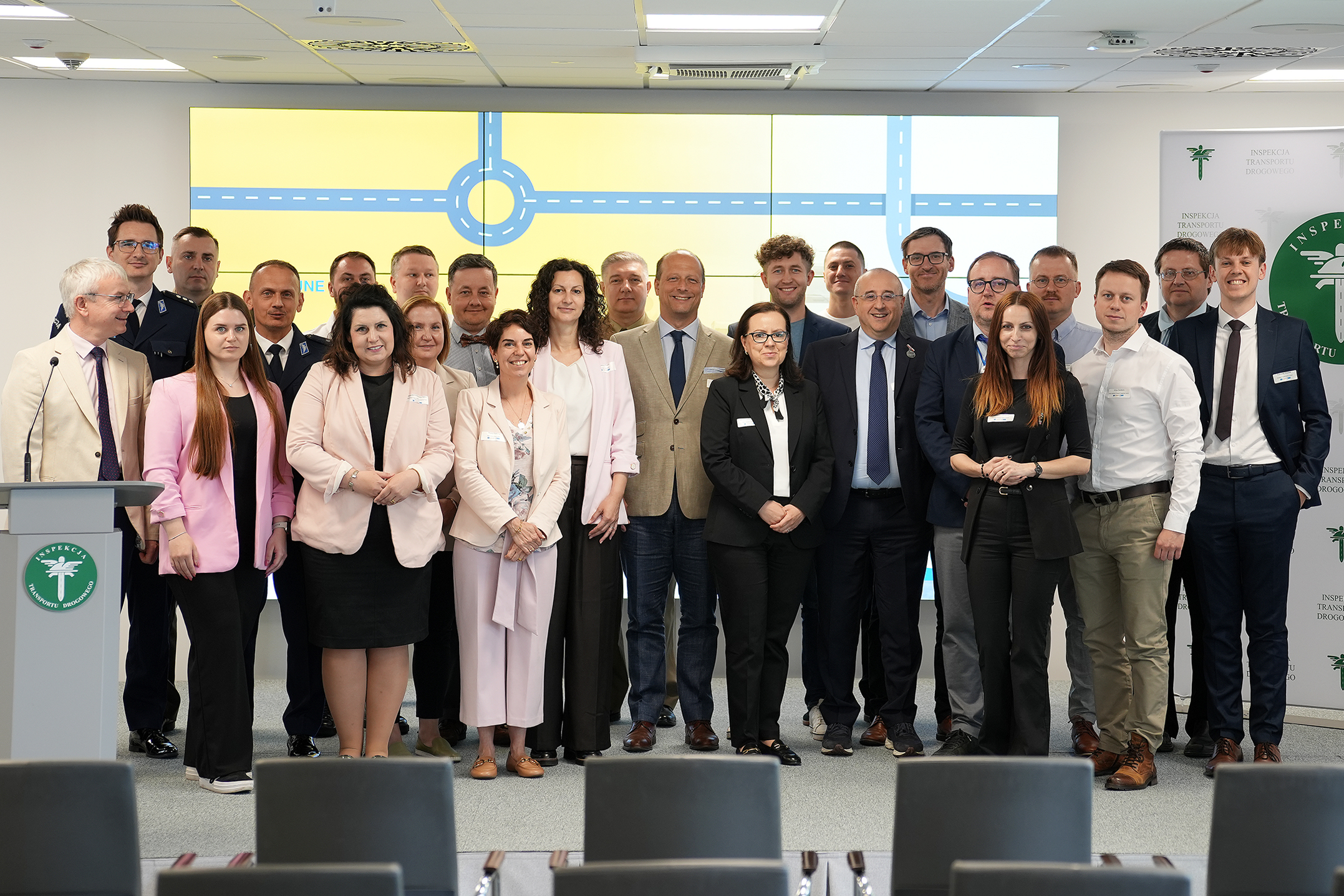
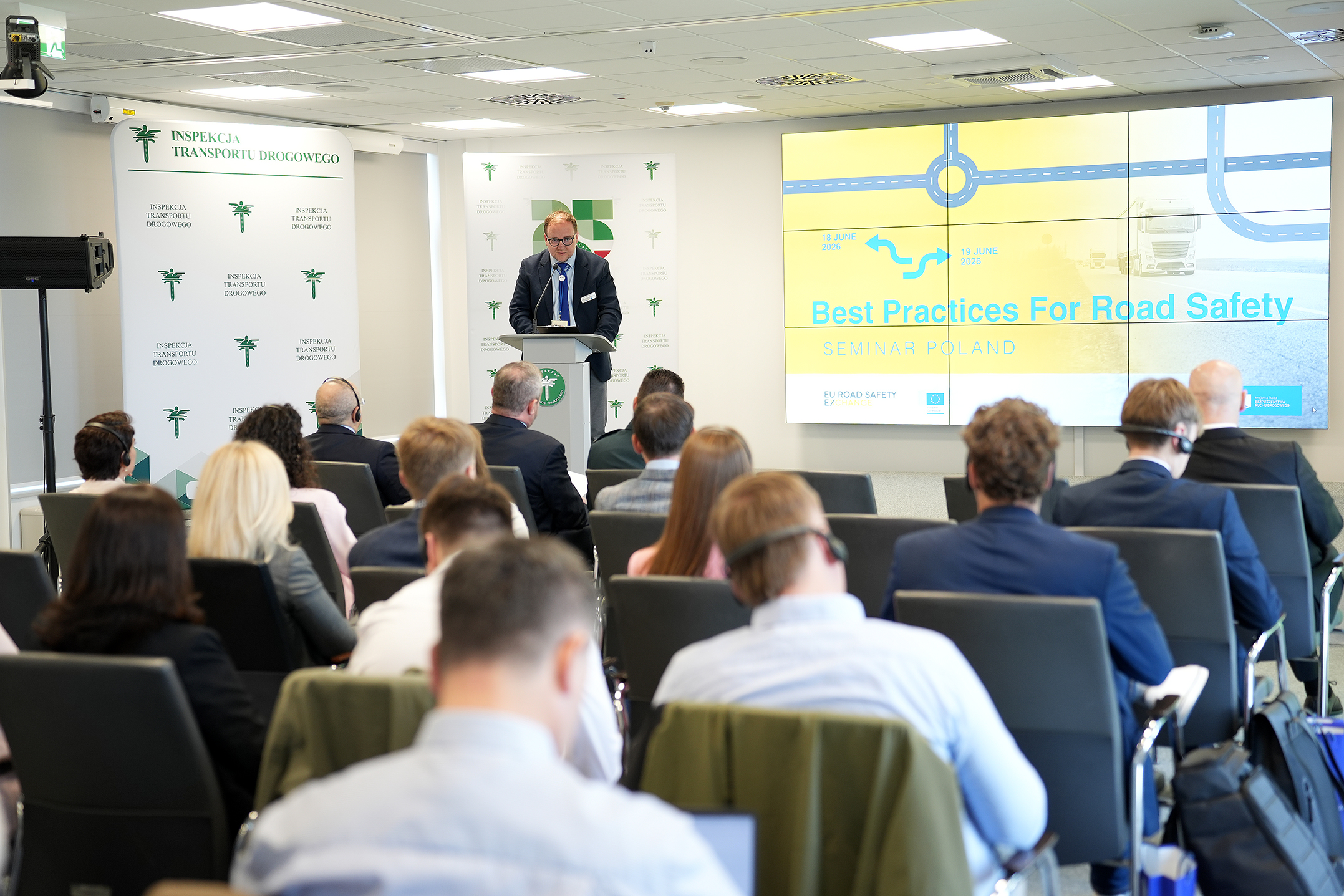
Transport experts from across Europe gathered in Warsaw on June 18–19 for the first best-practice seminar of the third EU Road Safety Exchange (EURSE III) project. Delegations from Bulgaria, Czechia, Estonia, Hungary, Lithuania, and Romania, joined by ETSC, learned about Poland’s recent progress in improving traffic safety.
The event was organized in cooperation with the National Road Safety Council at the Polish Ministry of Infrastructure, with support from the General Inspectorate of Road Transport (GITD) and the Fire University.
Over two days of presentations and live demonstrations, senior Polish officials detailed the coordinated strategy that drove one of the EU’s most significant reductions in traffic fatalities over the last decade.
The exchange focused heavily on tighter enforcement and stricter traffic legislation, alongside modern infrastructure upgrades and improved regional planning and coordination. Participants also examined Poland’s targeted safety campaigns and its highly efficient approach to post-crash emergency care.
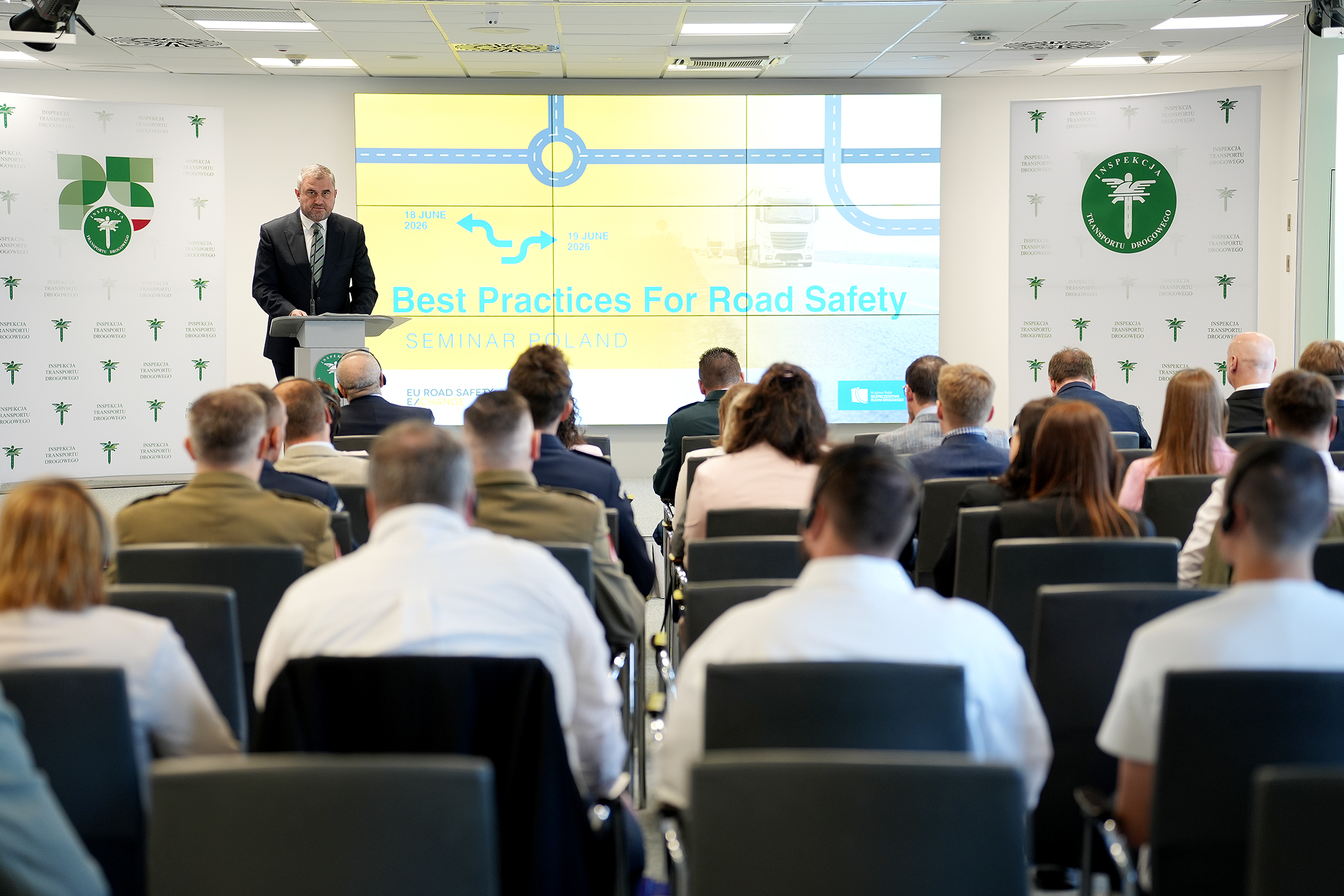
The seminar opened with welcome addresses from Stanisław Bukowiec, Secretary of State at the Ministry of Infrastructure and Vice-Chairman of the National Road Safety Council, Robert Koźlak, General Inspector of Road Transport, and Antonio Avenoso, Executive Director of ETSC.
The first day focused on the broad and comprehensive range of measures that have contributed to Poland’s road safety progress in recent years.
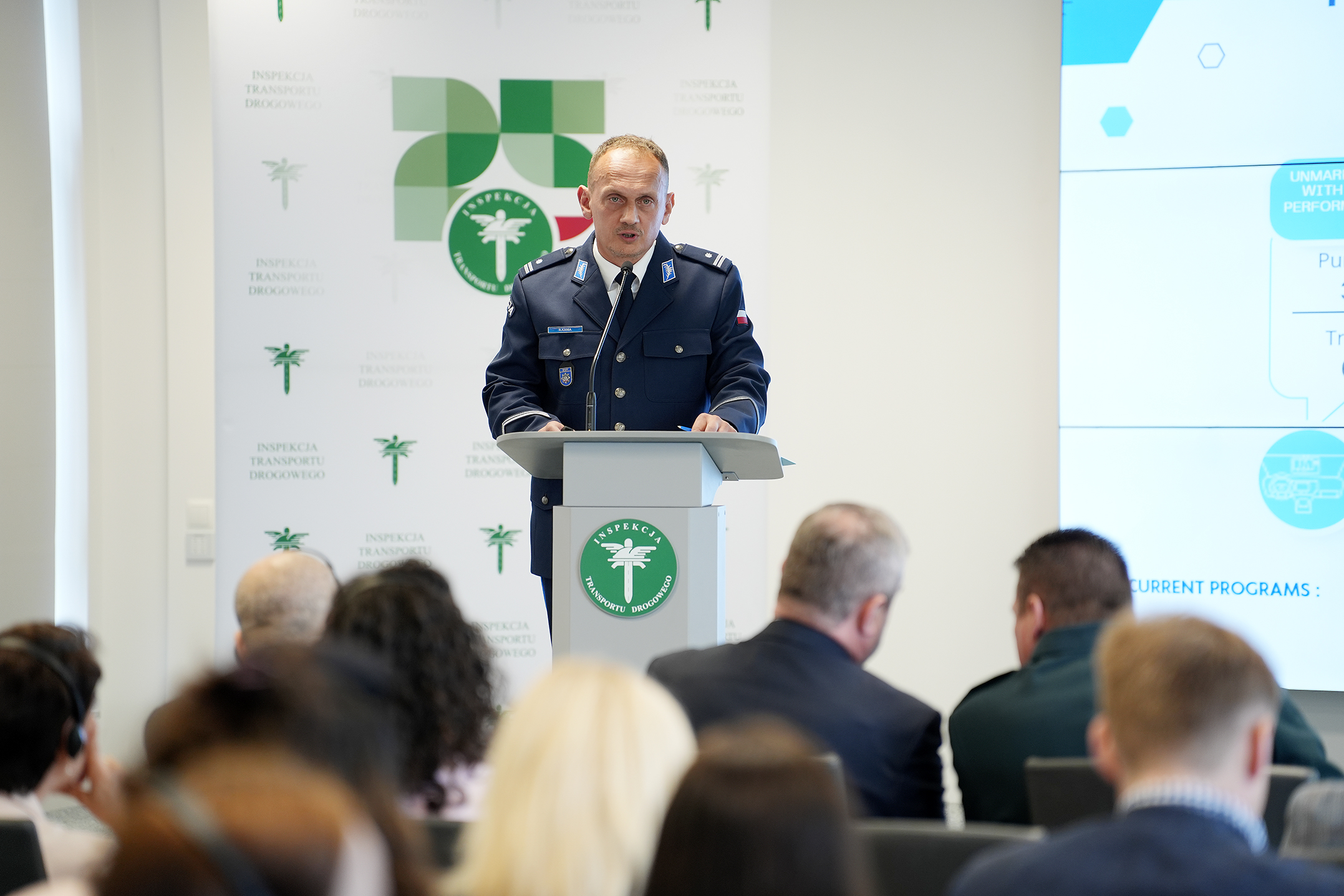
Robert Kania from the National Police Headquarters presented the role of police enforcement in supporting road safety improvements, including efforts to combat illegal street racing, drifting and other dangerous road behaviours.
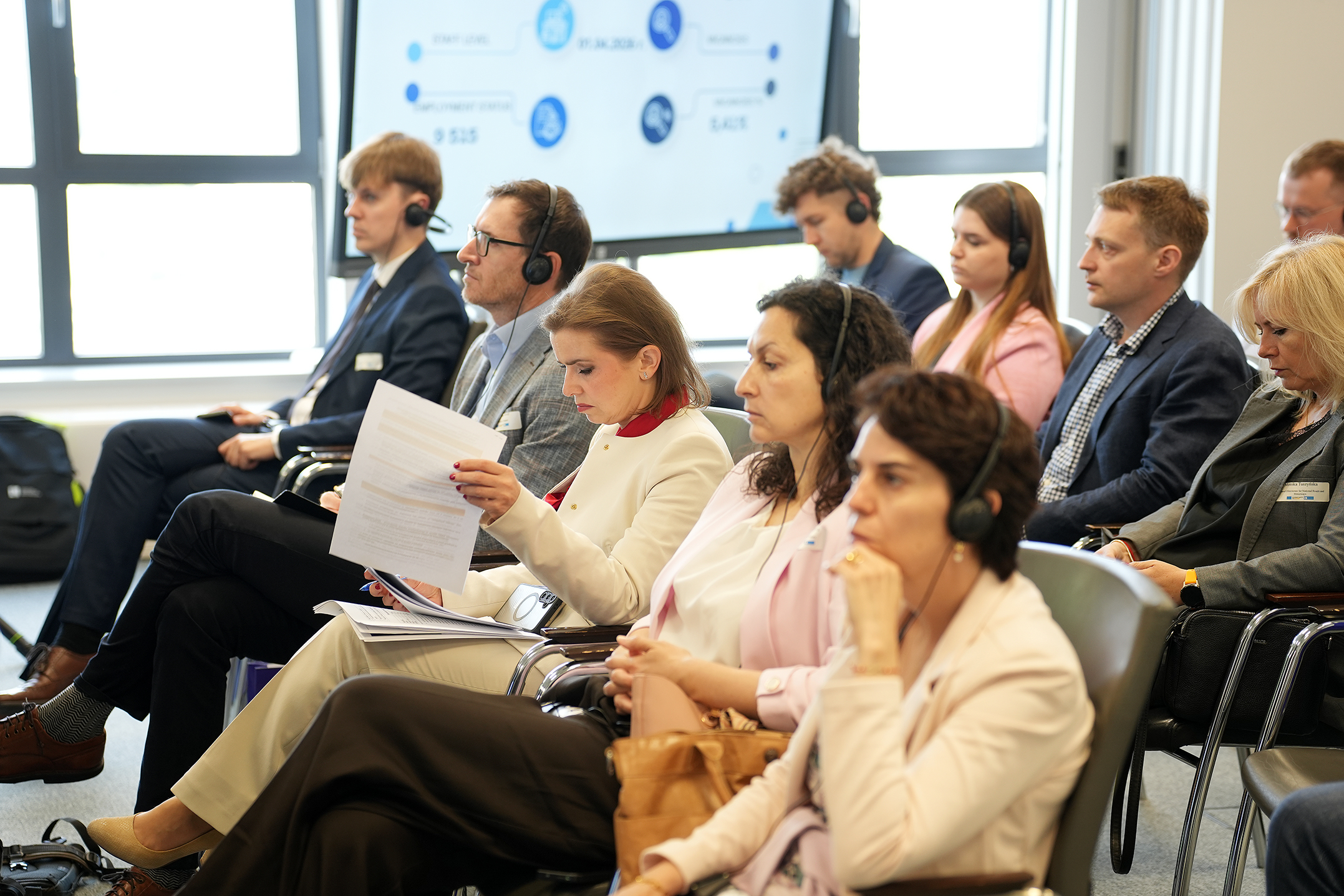
Monika Tuszyńska from the General Directorate for National Roads and Motorways provided an overview of recent infrastructure developments on Poland’s national road network.
The presentation showcased examples of new road projects and highlighted significant investments in pedestrian and cycling infrastructure, including plans to further expand walking and cycling routes in response to the growing number of people choosing active mobility.
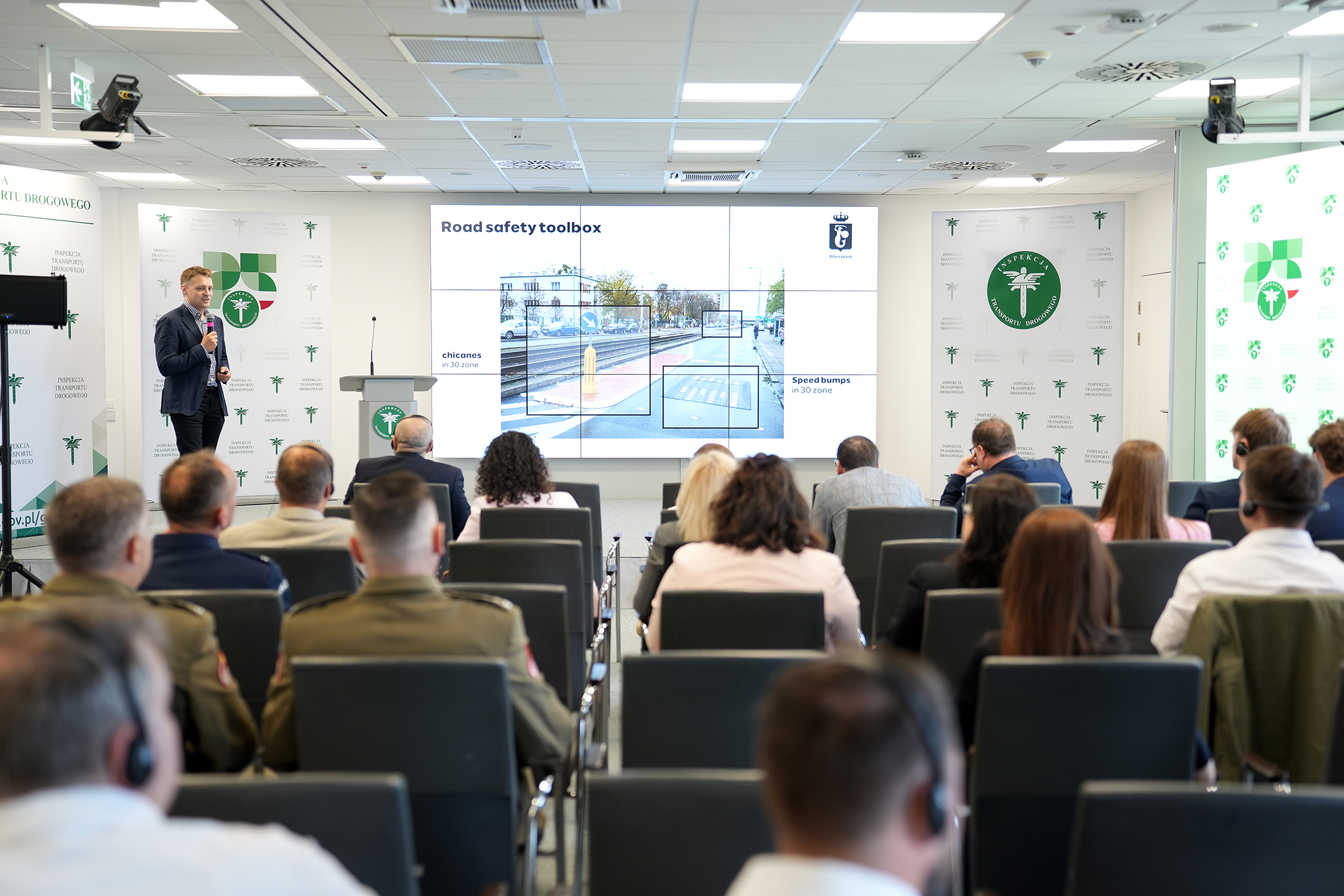
Mikołaj Pieńkos from the Municipal Roads Authority in Warsaw presented the city’s work on auditing pedestrian crossings, improving visibility and upgrading infrastructure for pedestrians.
Participants learned about Warsaw’s city-wide audit of unsignalised pedestrian crossings and the resulting measures, including dedicated lighting, refuge islands, raised crossings, improved visibility and traffic calming measures. The presentation also covered the analysis of pedestrian and cyclist interactions in shared public spaces, using behavioural observations, pedestrian flow data and user surveys
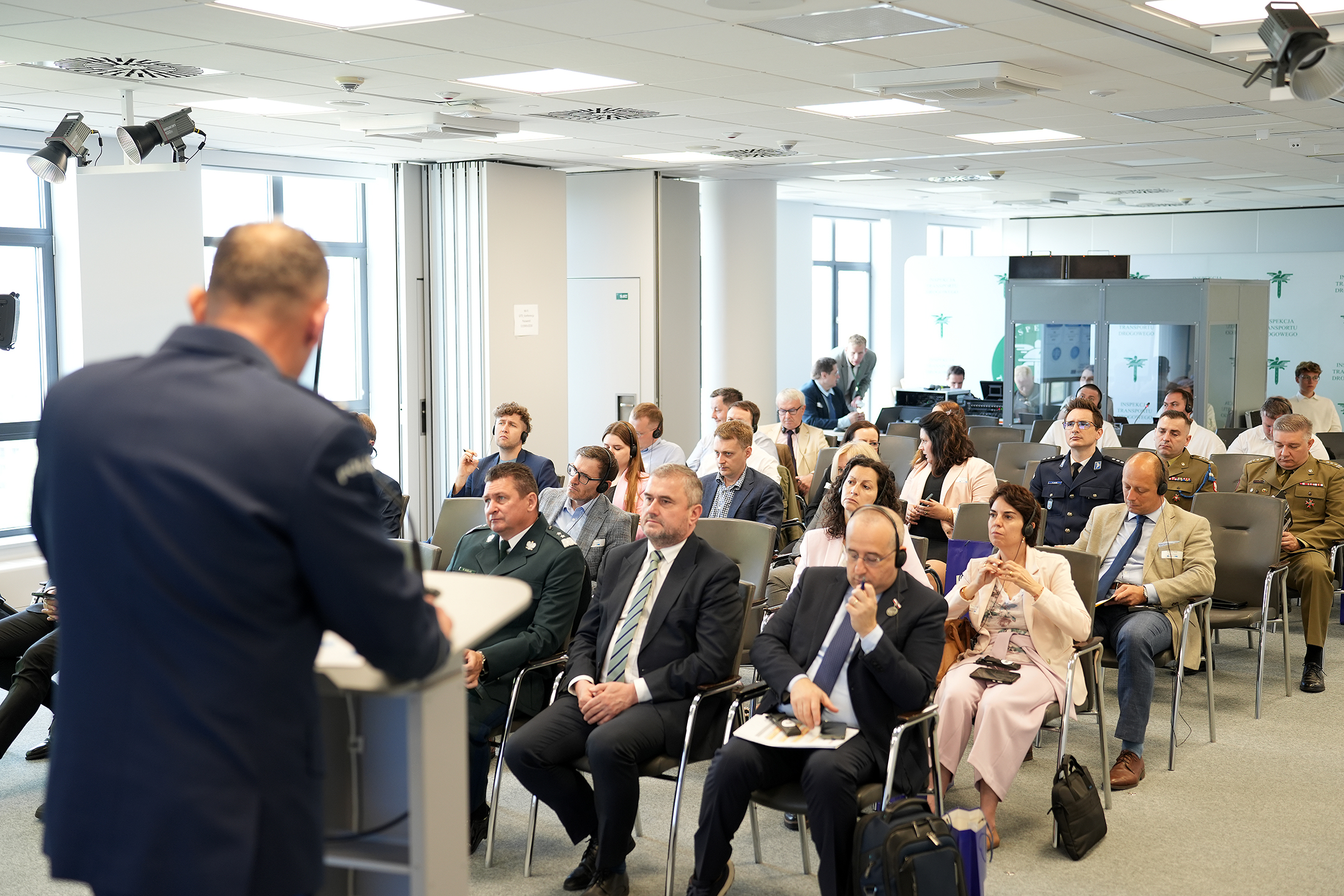
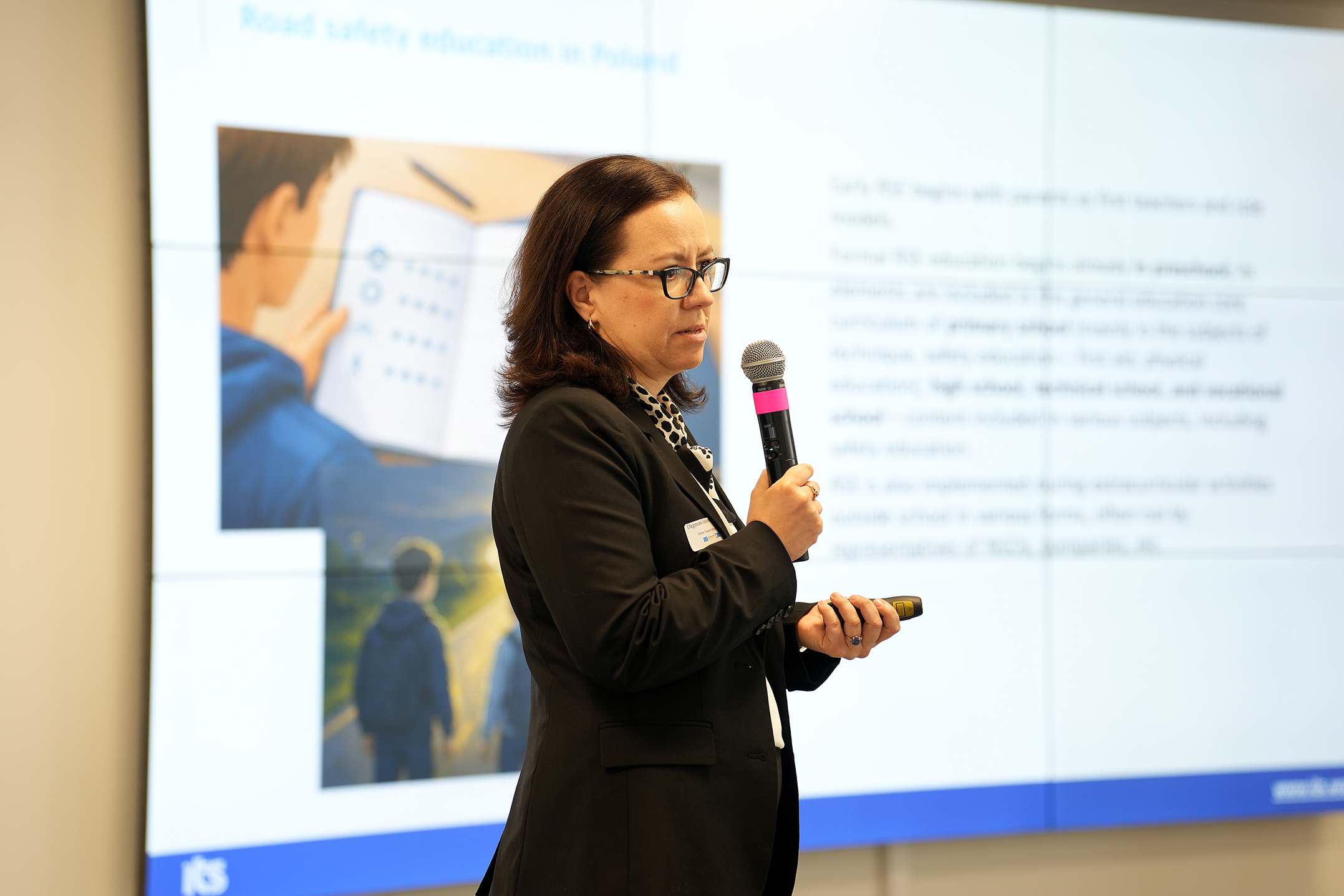
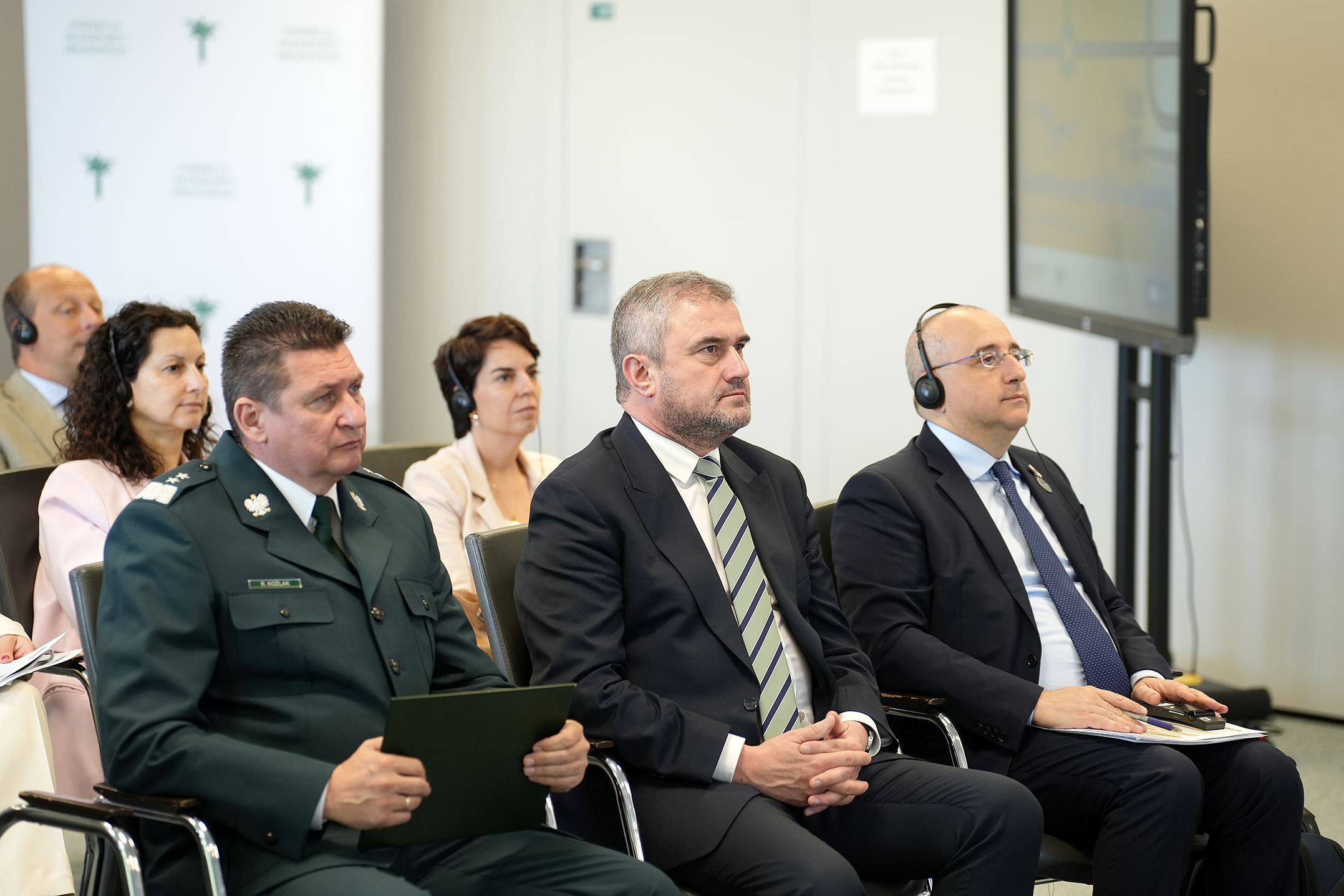
Participants also learned about the activities of regional road safety councils through presentations by Tomasz Matuszewski from the Masovian Voivodeship Road Safety Council and Katarzyna Dobrzańska-Junco from the Małopolska Voivodeship Road Safety Council.
The presentations highlighted the role of regional road safety councils in coordinating road safety activities, supporting local initiatives and bringing together stakeholders from different sectors.
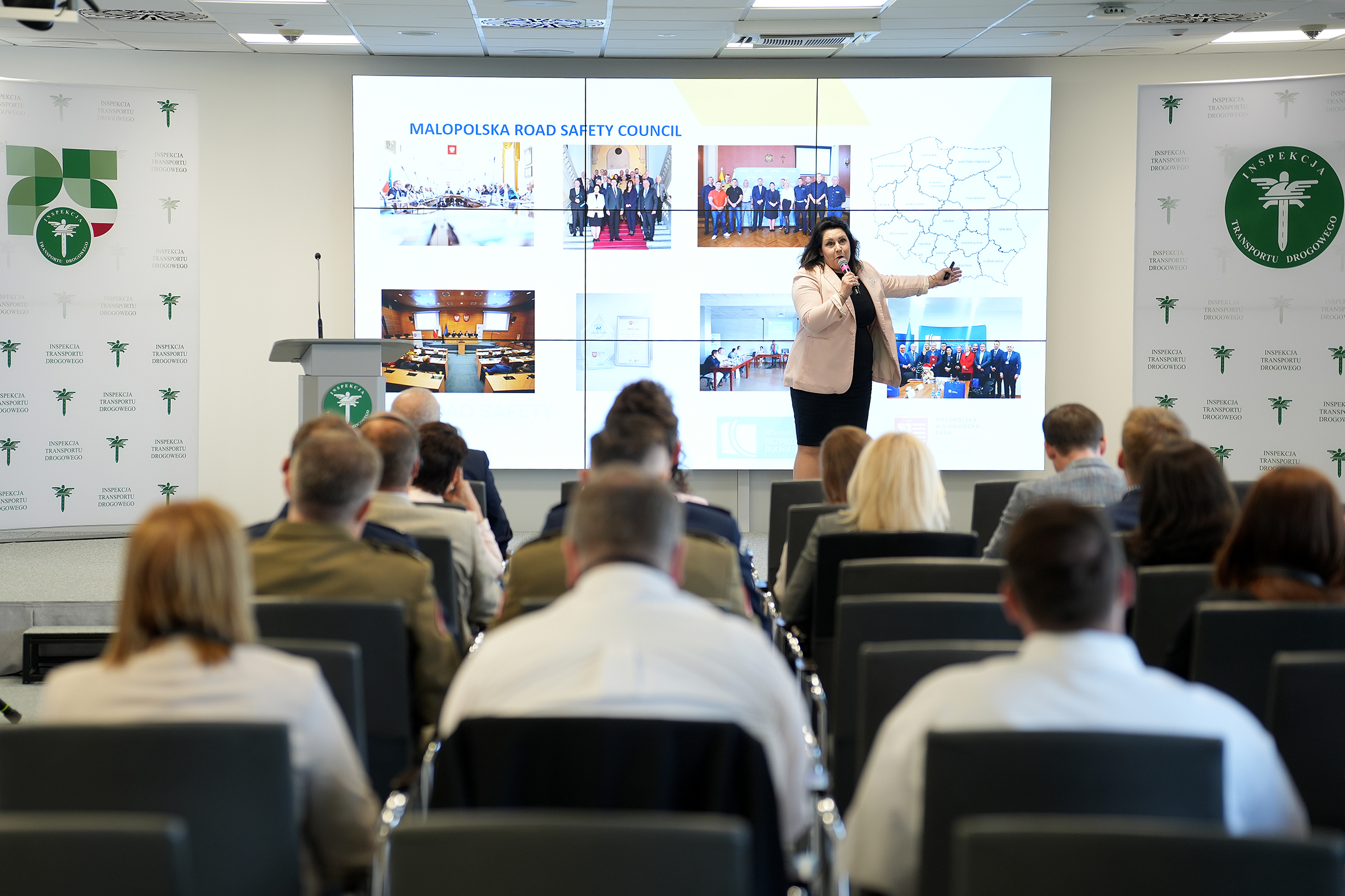
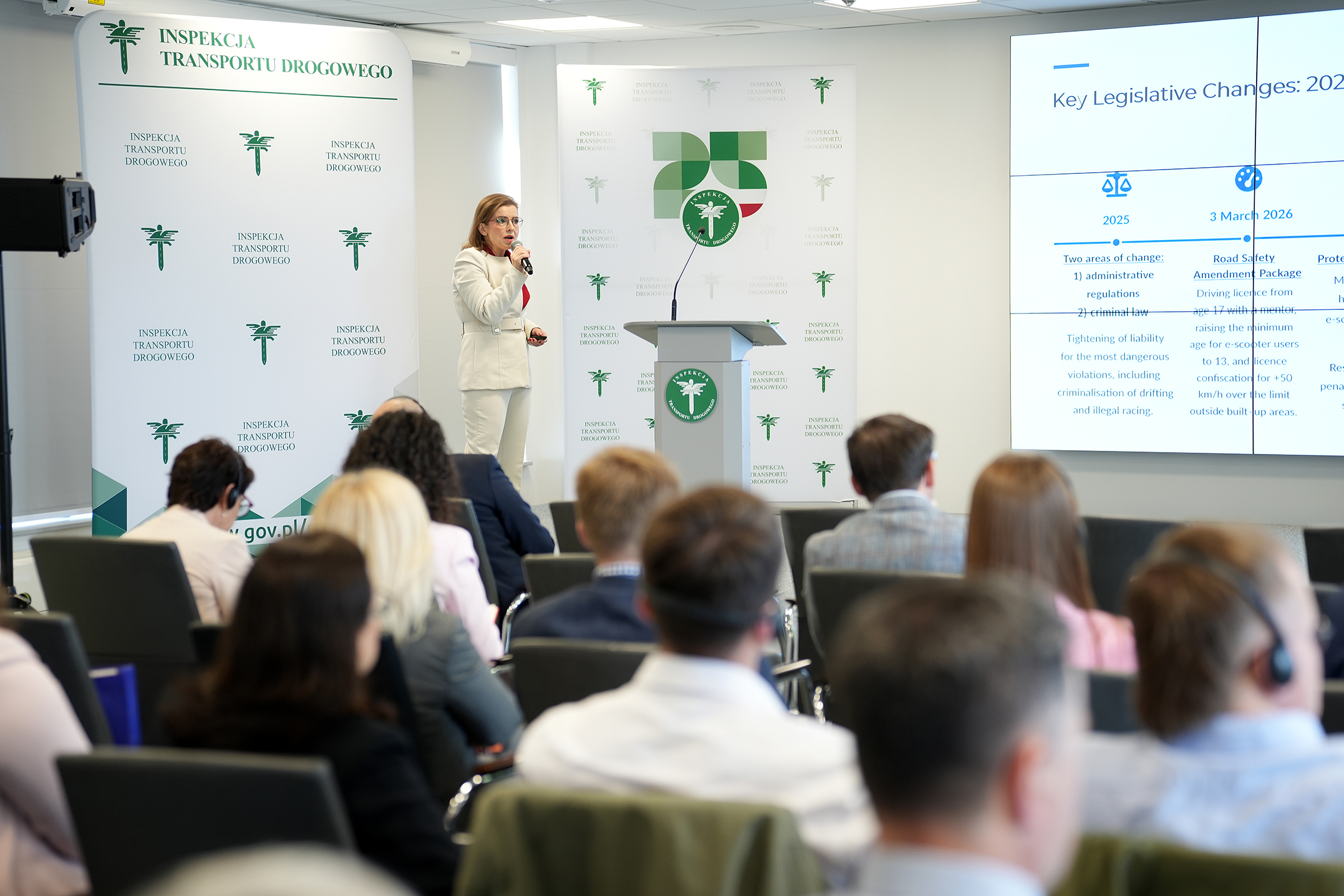
Olga Tworek from the Ministry of Infrastructure presented recent legislative developments in the road safety field and discussed future challenges.
Topics included recent reforms to driver training and testing, the introduction of driving licence withdrawal for drivers exceeding the speed limit by more than 50 km/h outside urban areas, and challenges related to drink driving, e-scooter safety and speeding, of particular importance to all the participating countries.
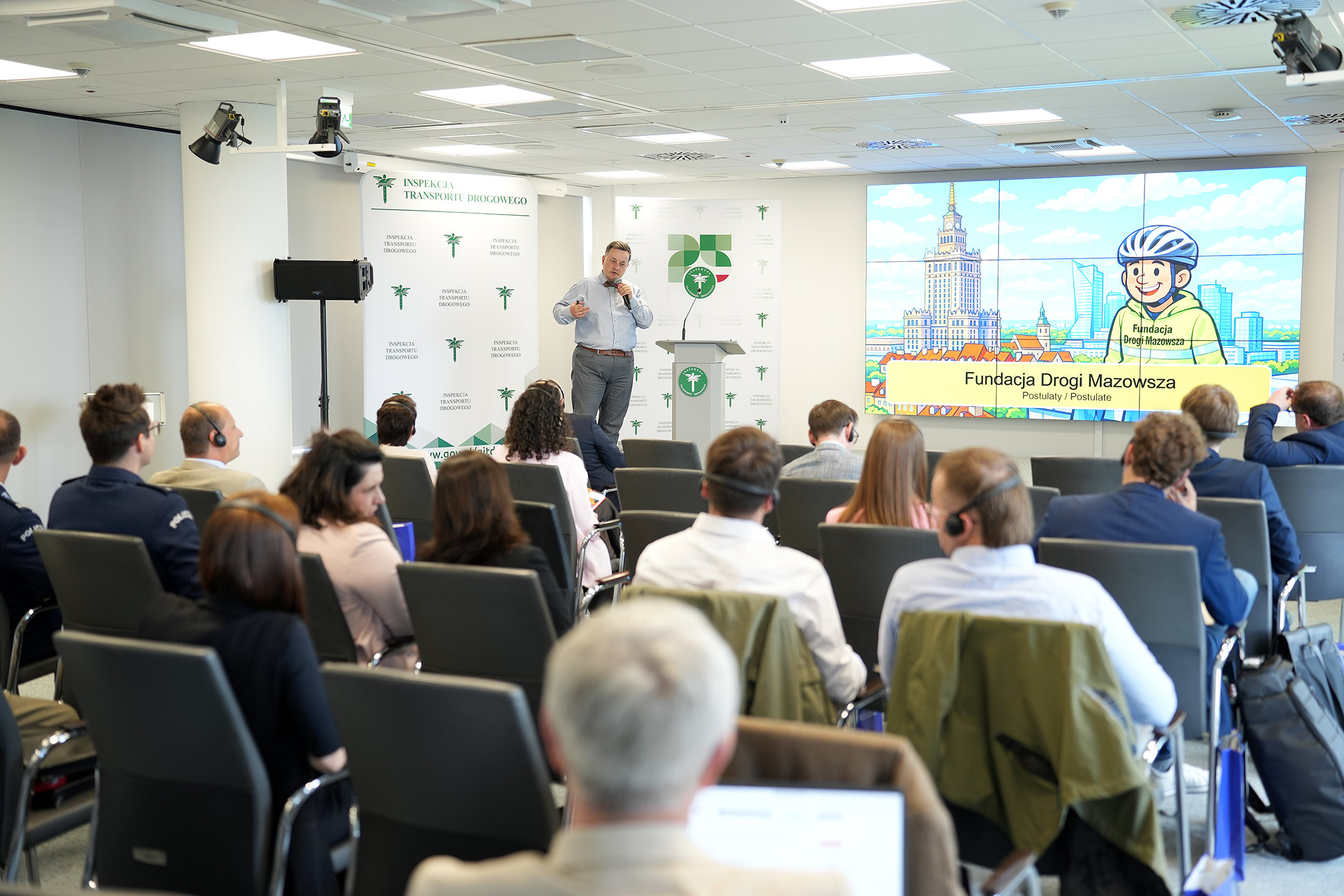
The programme also covered education and training initiatives. Adam Sobieraj from the Roads of Masovia Foundation presented NGO-led road safety education projects carried out with children and young people.
Dagmara Jankowska-Karpa from the Motor Transport Institute presented a new qualification framework for road safety educators, including a certified “road safety trainer” qualification designed to support professional development in road safety education.
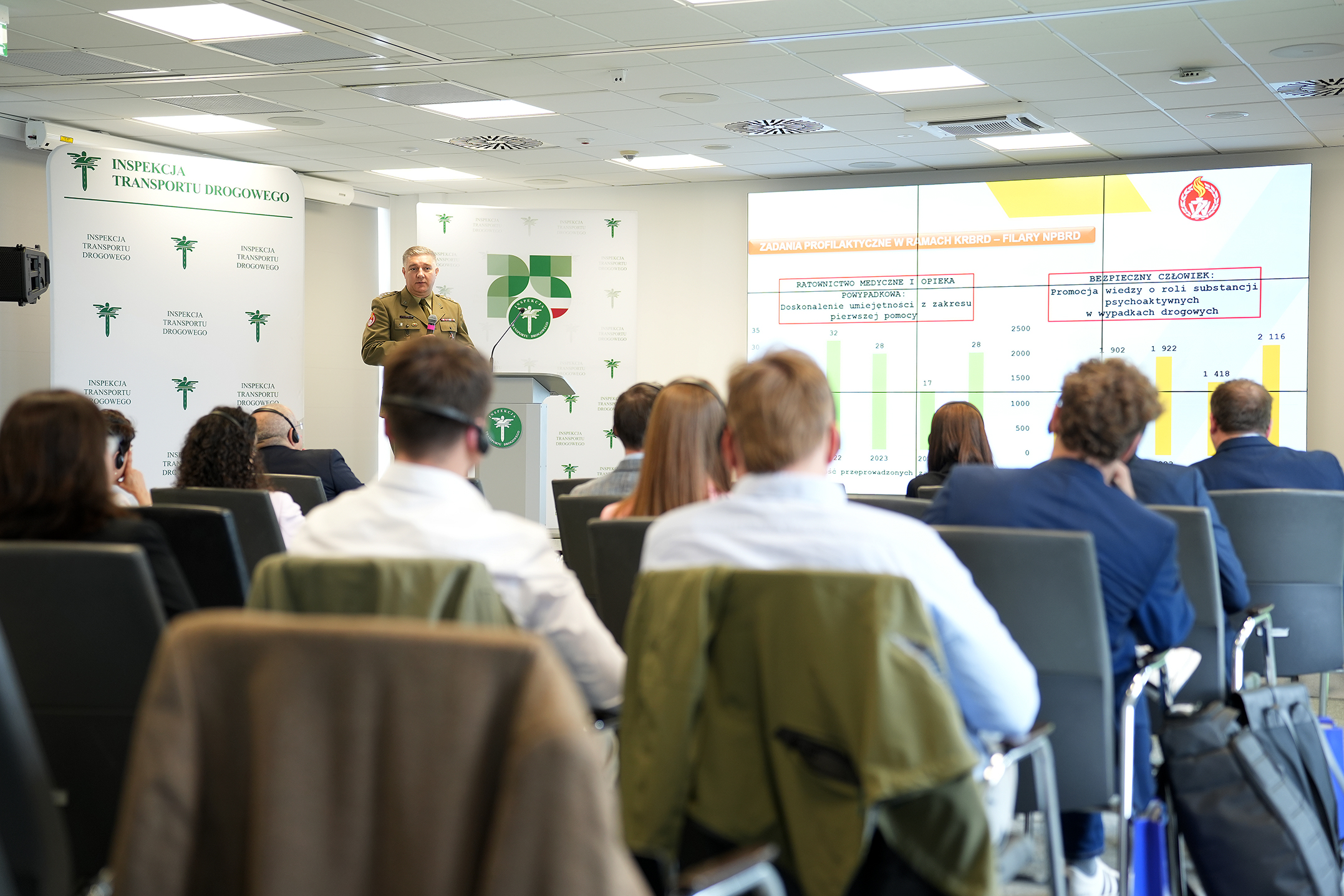
Participants also learned about preventive road safety activities carried out within the Polish Armed Forces through a presentation by Colonel Marcin Stormowski.
The session highlighted the inclusion of road safety within the Armed Forces’ wider prevention framework, covering educational campaigns, training activities and awareness-raising initiatives.
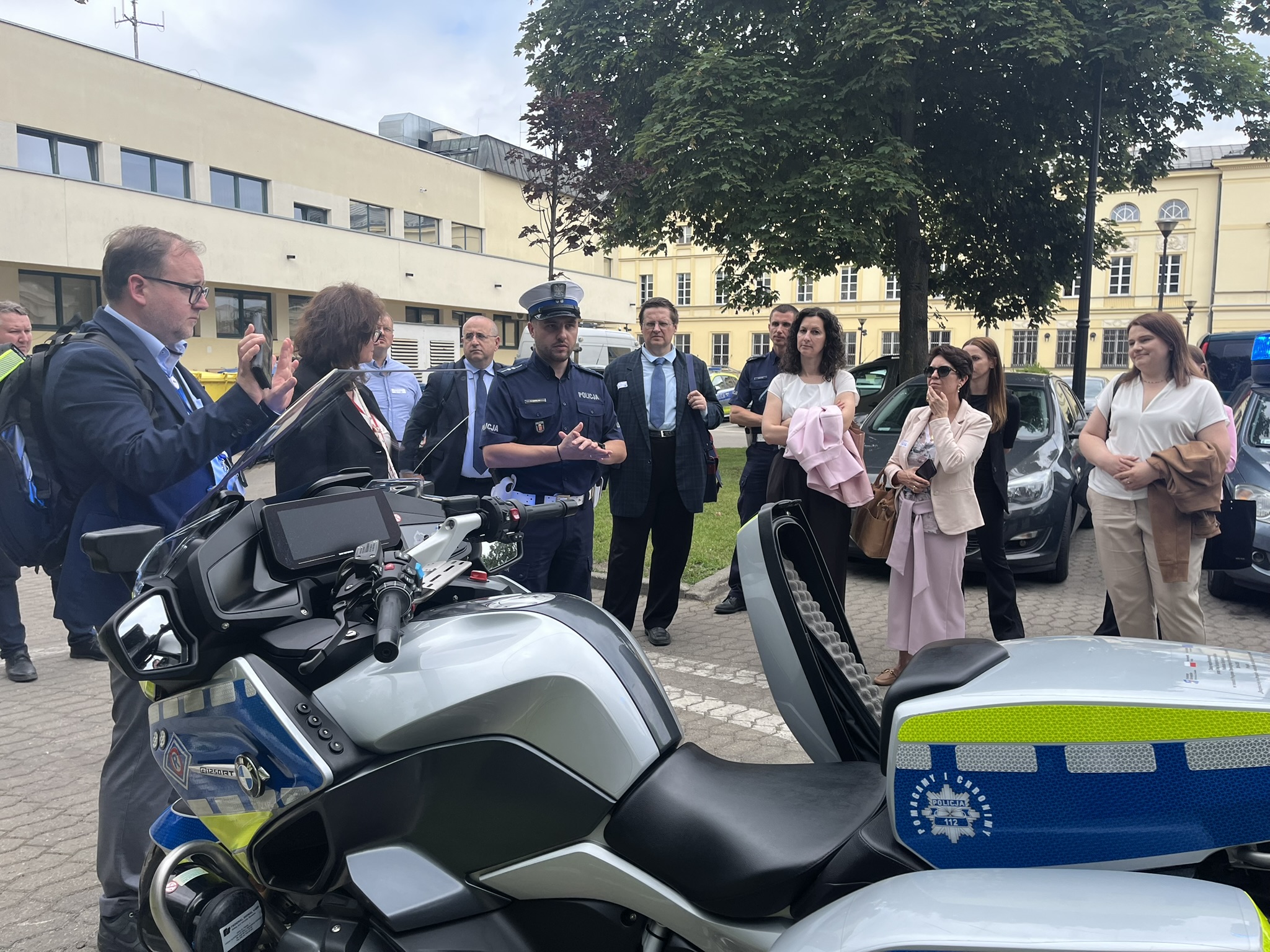
In the afternoon, participants visited the Warsaw Police Headquarters, where they learned about road traffic supervision activities and the use of EU funding to strengthen enforcement capacity.
Participants were introduced to a range of technologies used by the police for traffic enforcement and collision investigations, including drones, speed enforcement devices and specialised collision mapping equipment, helping officers gather information more efficiently and reducing disruption to road users.
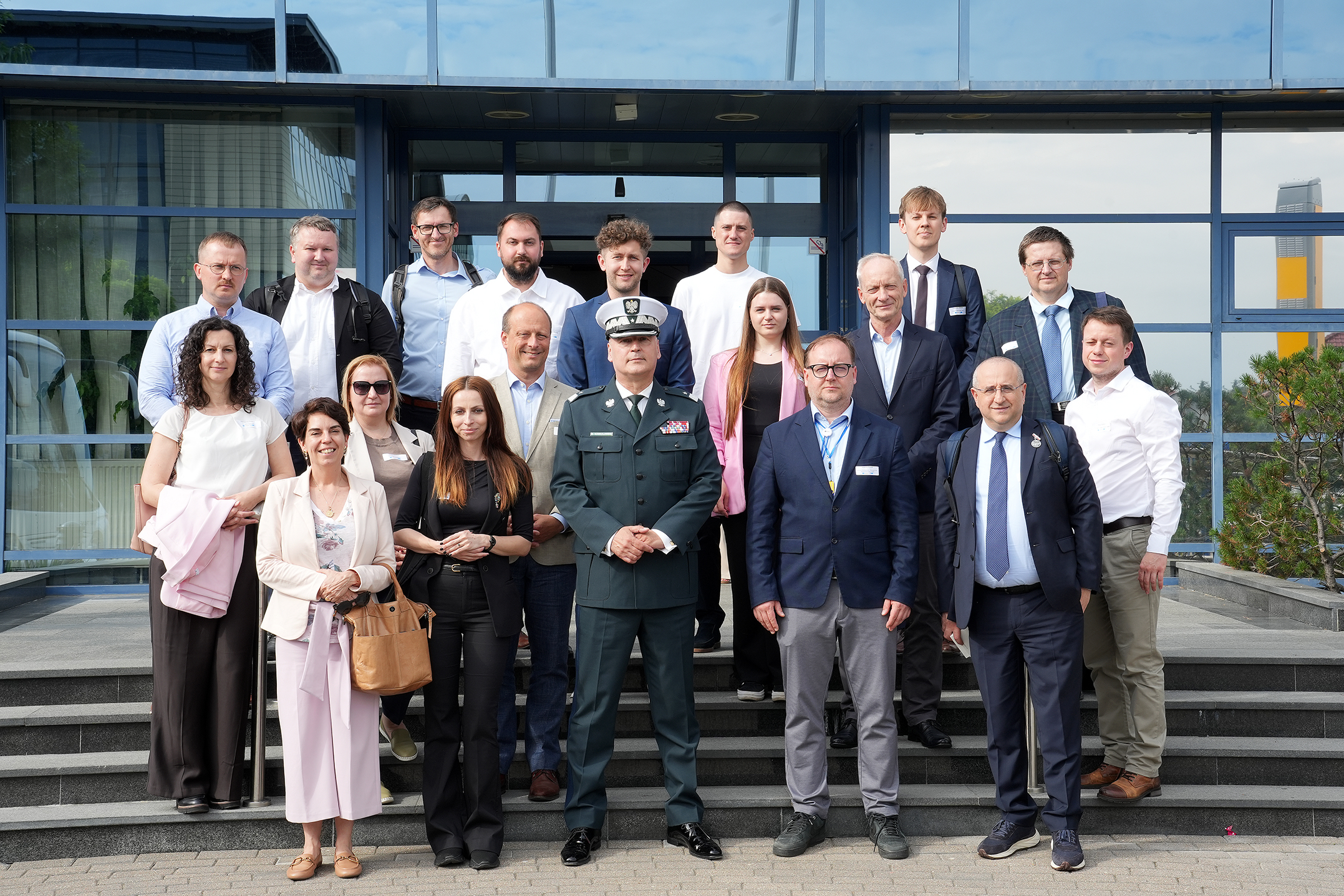
The day concluded with a visit to the Road Traffic Automatic Supervision Centre (CANARD). Marek Konkolewski, Deputy General Inspector of Road Transport, presented the centre’s work and the development of Poland’s automated enforcement system, including recent developments and planned legislative changes.
The visit also included a demonstration of the processes used to manage the enforcement network, from monitoring equipment performance to reviewing and processing recorded offences.
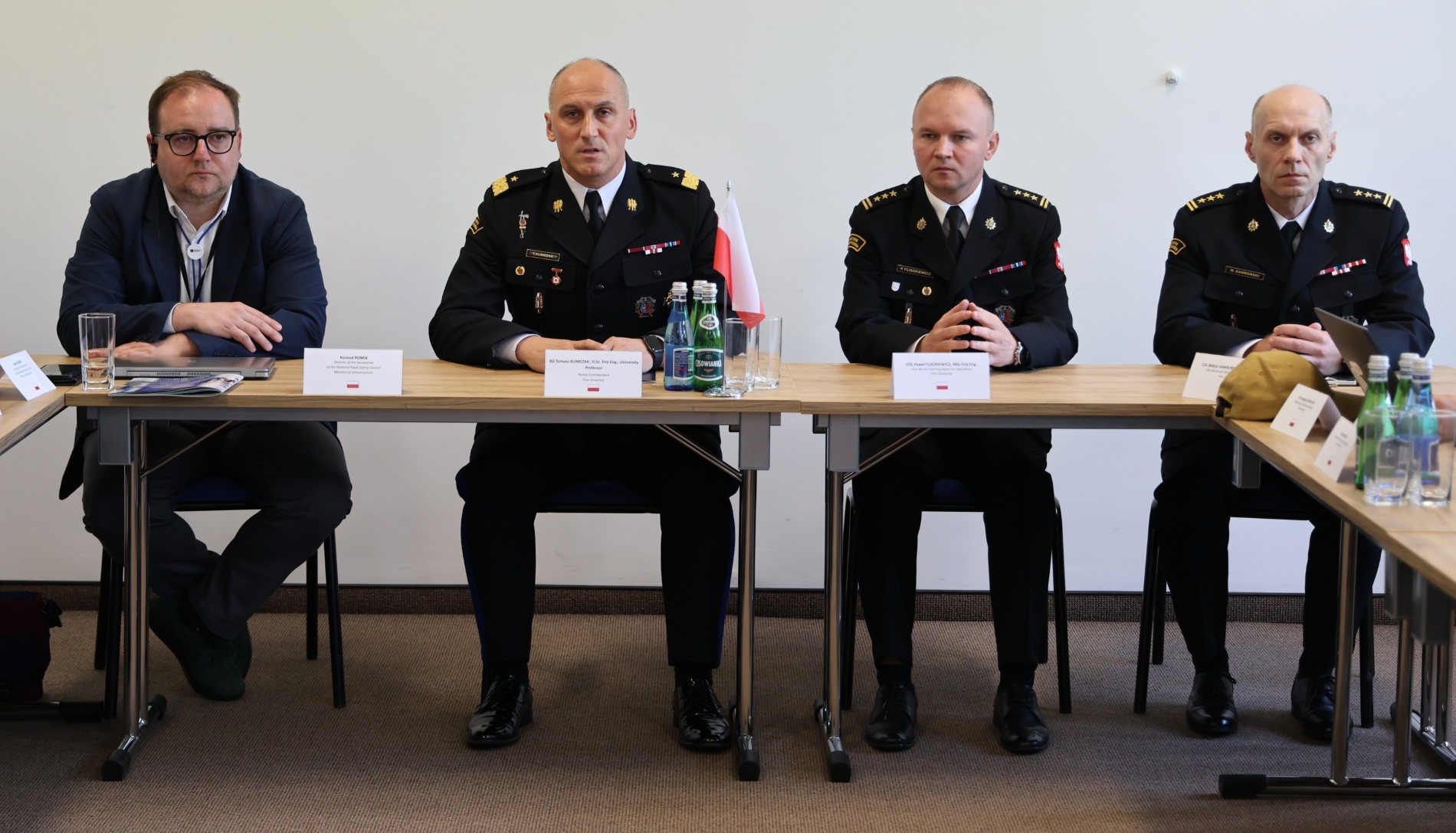
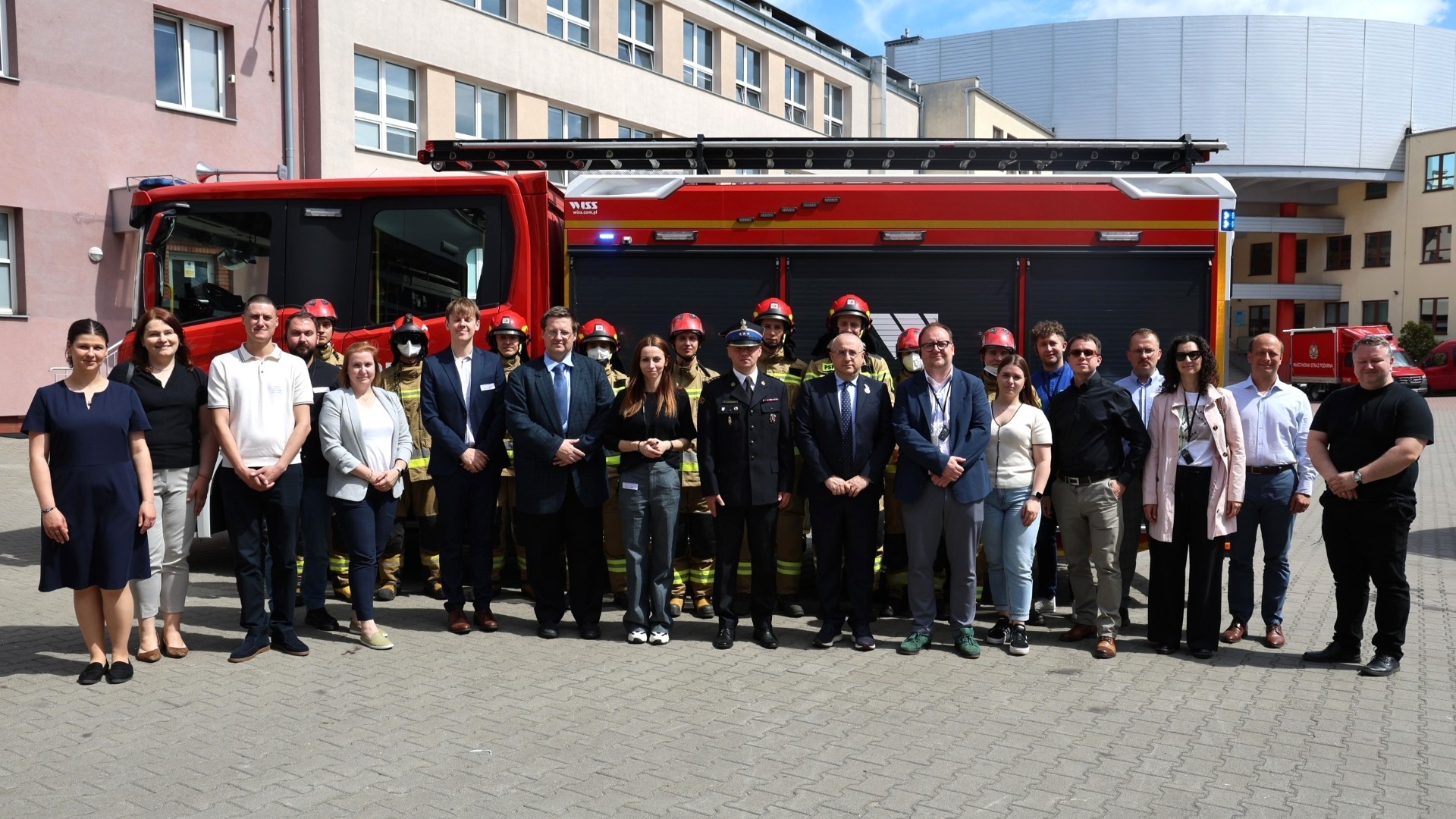
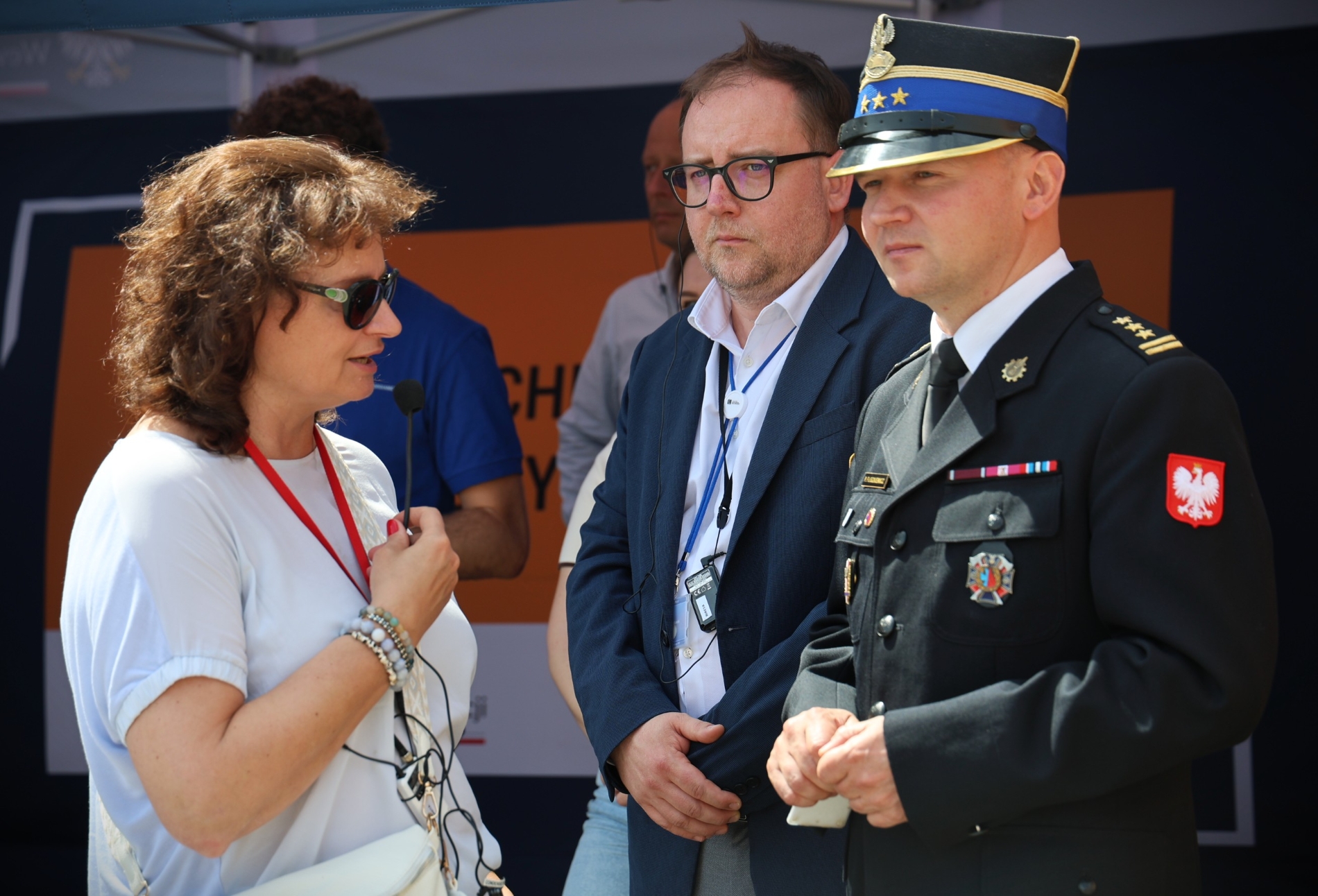
The second day focused on post-crash response and emergency services. Participants visited the Fire University in Warsaw, where they were welcomed by Rector–Commandant Tomasz Klimczak.
Presentations covered the development of technical rescue services in Poland, the organisation of post-crash response and emergency medical care, as well as training and education activities related to rescue and first aid.
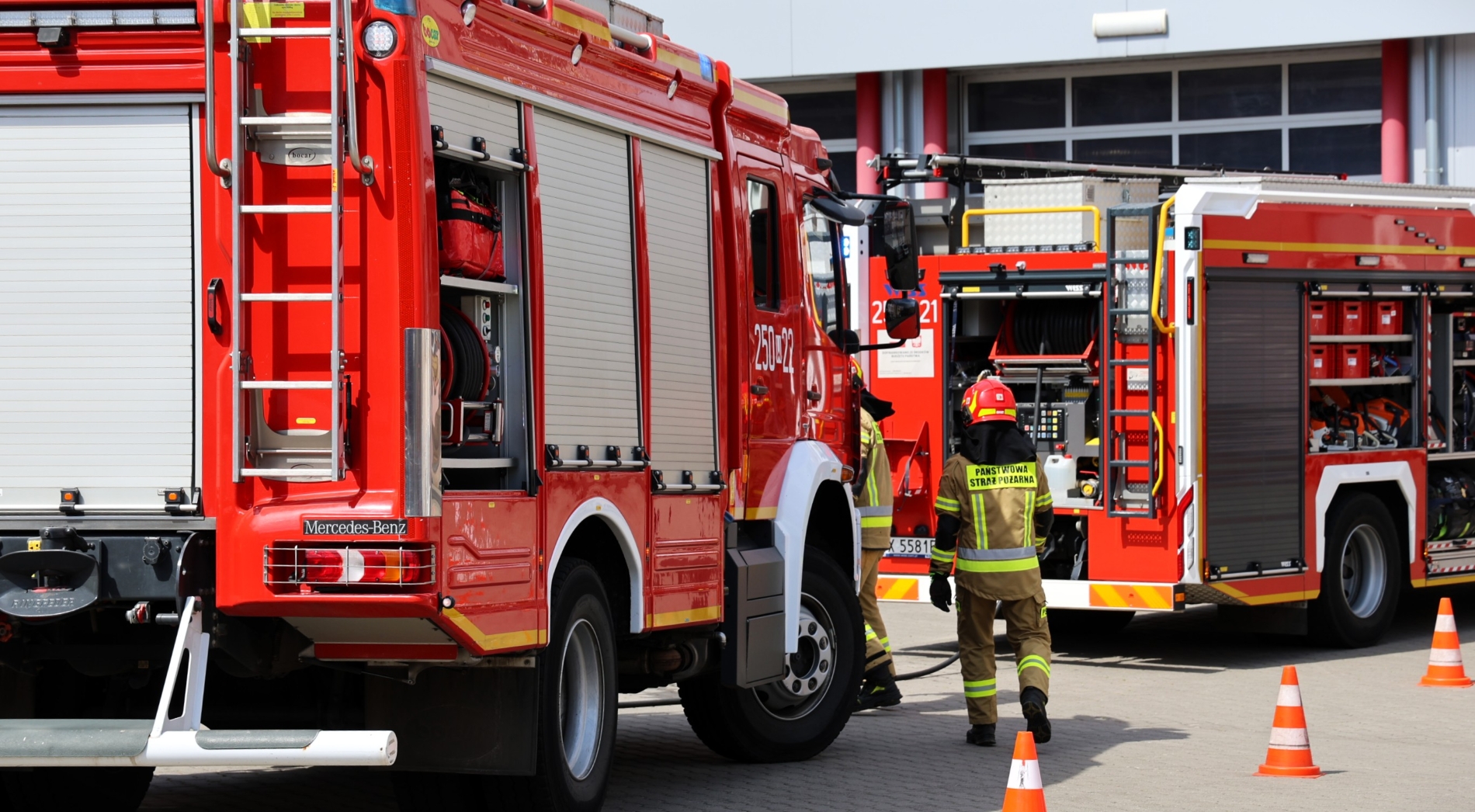
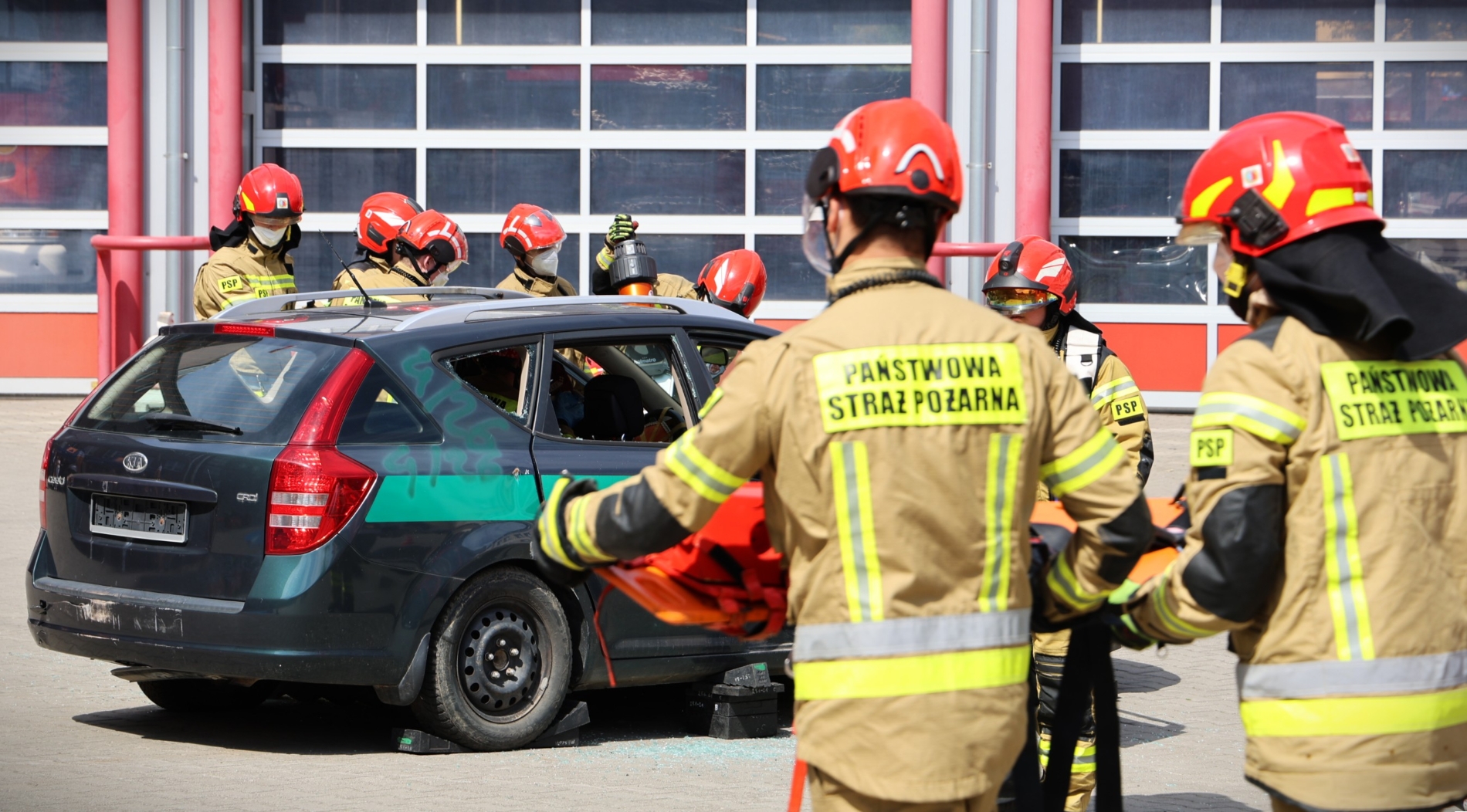
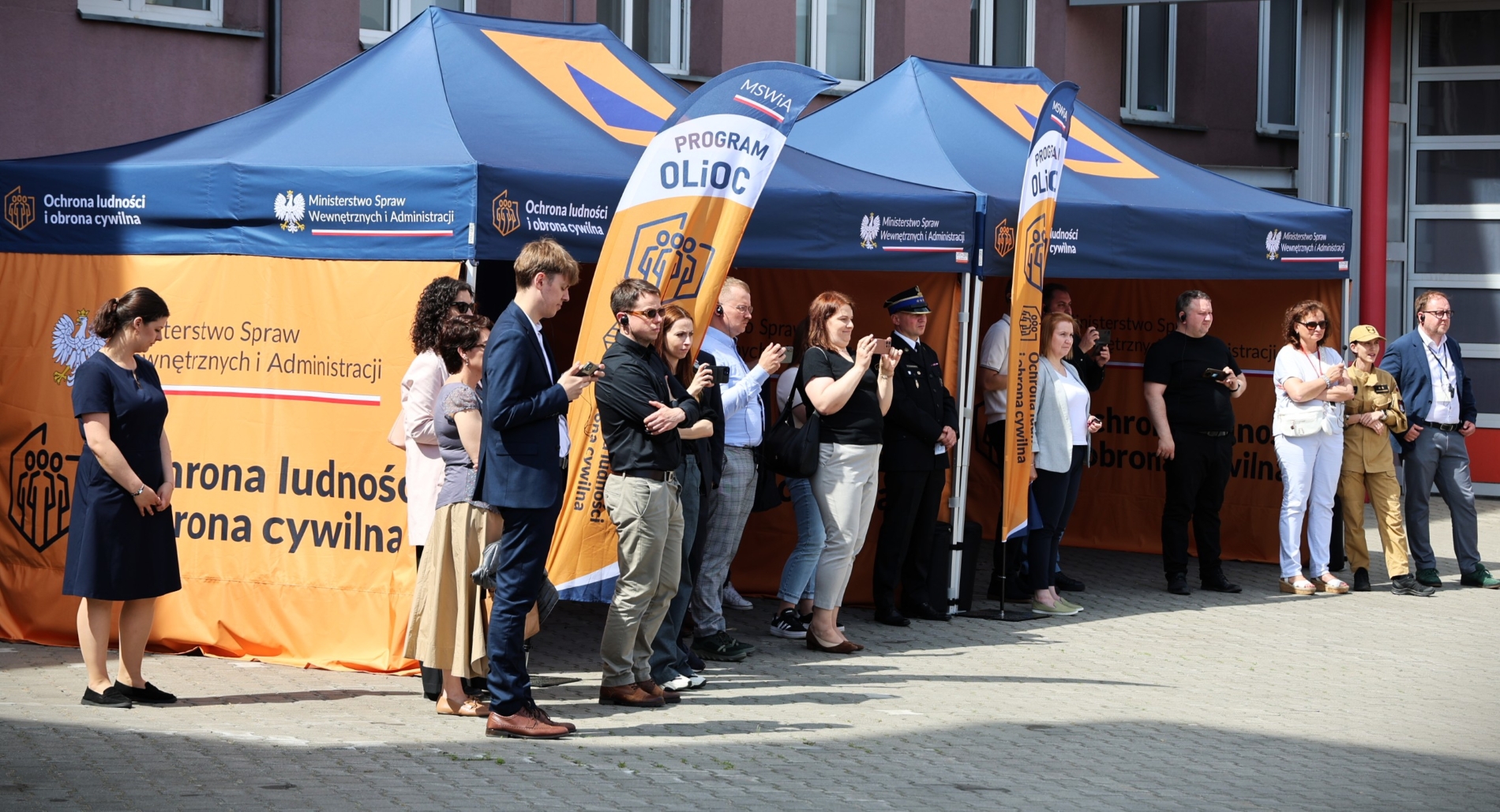
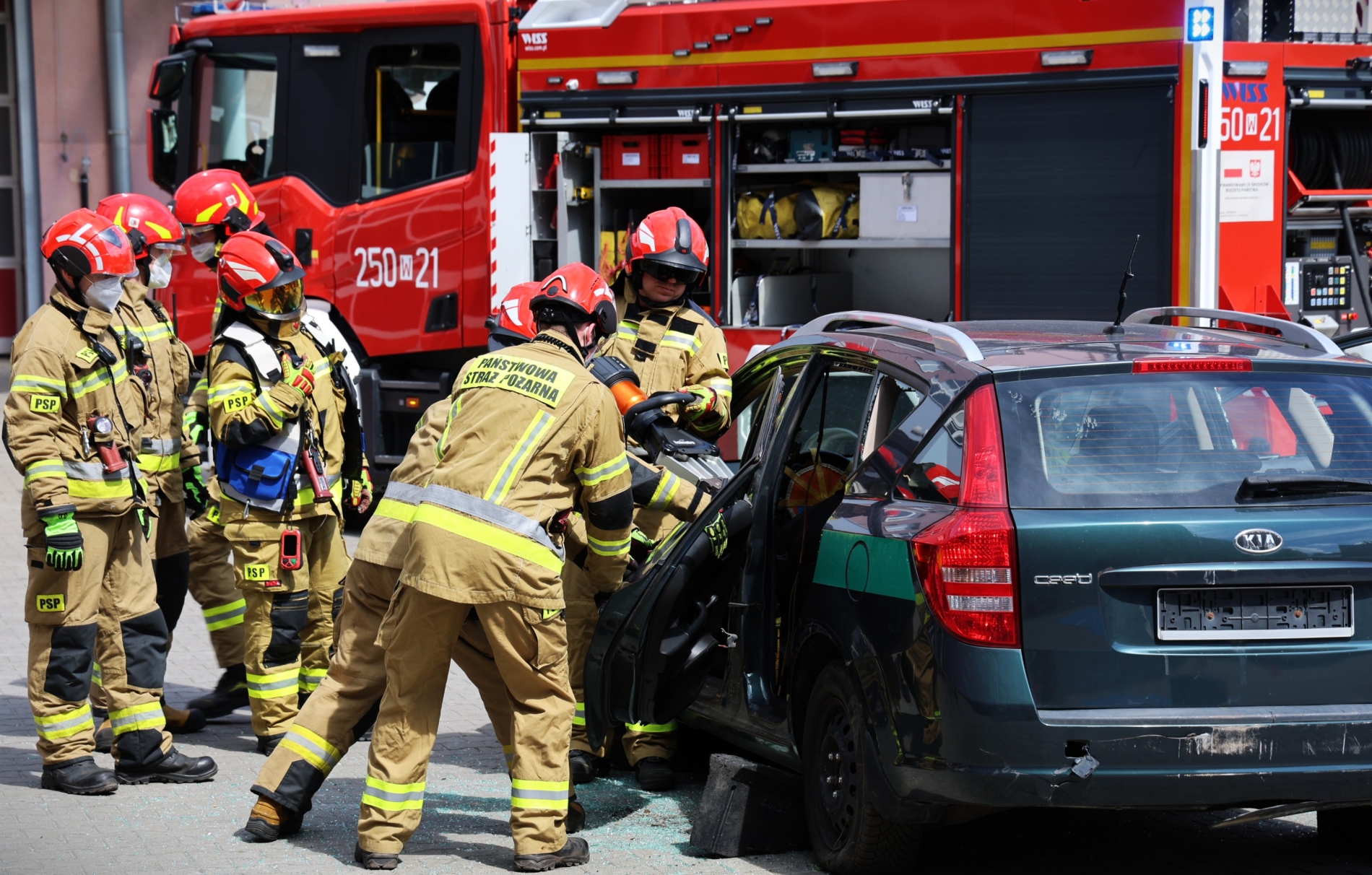
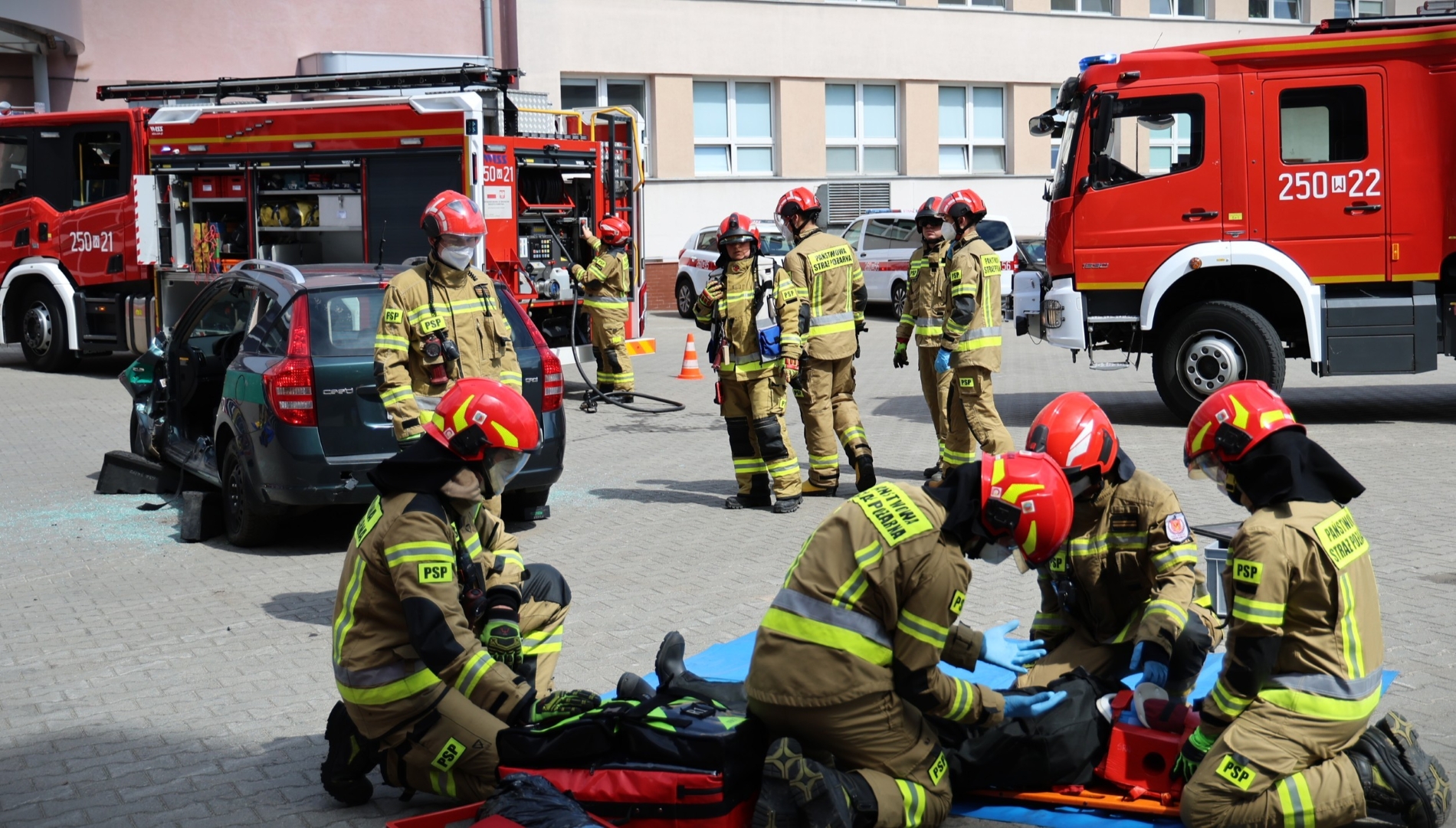
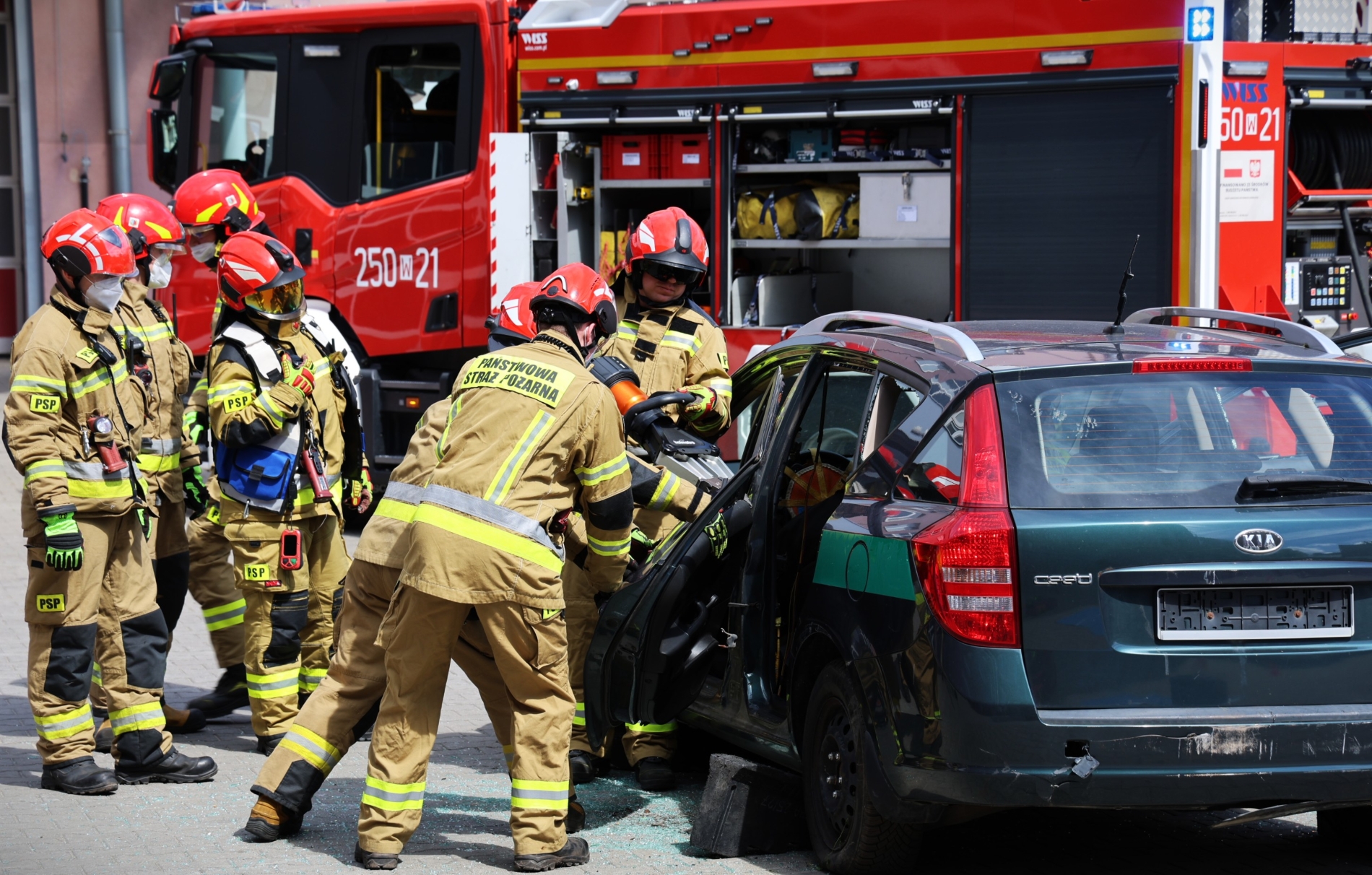
The seminar concluded with a practical demonstration of rescue operations following a road collision. The exercise simulated the rescue of injured road users from a damaged vehicle, allowing participants to observe the use of specialised rescue equipment and the precise procedures required to safely extract casualties and provide emergency care.
The best practice seminar provided an opportunity for participants to discuss a wide range of road safety measures, compare experiences from different countries and examine practical examples of enforcement, infrastructure, education and post-crash response measures implemented in Poland.
EU Road Safety Exchange creates a network of road safety professionals committed to sharing good practice and making safer roads across the EU.
Fotocredit: Tomasz ZAMIELA and General Inspectorate of Road Transport (GITD)